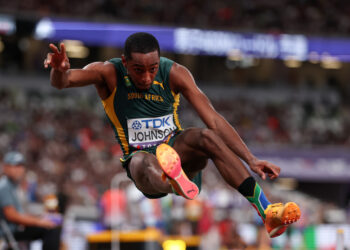
World Athletics has officially released the qualification system and entry standards for the 2027 World Athletics Championships in Beijing, and the writing on the wall is clear: the landscape of global athletics is shifting.
For South African athletics, the release of these standards is not just an administrative update, it is the starting gun for a crucial 15-month strategic sprint. If we intend to be major players in Beijing, the planning from the boardroom down to the local track must begin today.
Here is a breakdown of the new qualification ecosystem and what Athletics South Africa (ASA), local coaches, and our senior athletes must do to rise to the occasion.
The Shift: Consistency is King (The 40/60 Split)
Historically, qualification for global championships hovered around a 50/50 split between athletes achieving the automatic entry standard and those filling the remaining quota through world rankings. For Beijing 2027, World Athletics is deliberately tightening the screws on automatic entry standards.
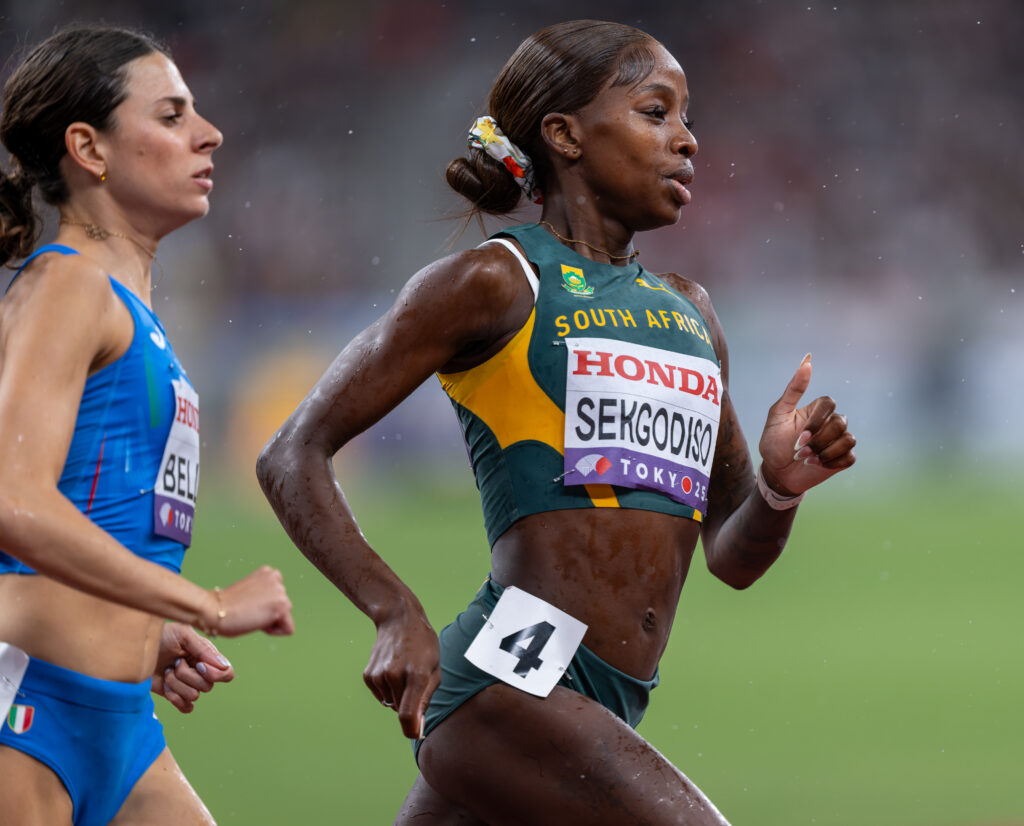
TOKYO, JAPAN - SEPTEMBER 18: Prudence Sekgodiso of South Africa during the Women’s 800m heats on day 6 of the 2025 World Athletics Championships Tokyo at Japan National Stadium on September 18, 2025 in Tokyo, Japan. (Photo by Anton Geyser/Gallo Images)
The governing body has engineered the system to produce a 40/60 split. Moving forward, it is expected that only 40% of athletes will qualify via the brutally fast automatic entry standards, leaving the remaining 60% to qualify through the World Rankings system. Furthermore, World Athletics has explicitly adjusted the ranking system to place more weight on the result score rather than just the placing score, levelling the playing field for athletes who may not have access to elite diamond-tier meetings every week.
This shift heavily favours the World Athletics league structures over once-off miracle runs. Consistency, regular competition at high-category meets, and strategic season planning are now the most valuable currencies in the sport.
An Urgent Call for International Exposure
This 60% rankings route exposes an immediate strategic imperative for South Africa. To ensure our top talent pools are in the conversation for World Championship qualification, the federation must actively facilitate greater exposure to international events.
Competing solely in domestic events will not yield the ranking points required to comfortably secure a ticket to Beijing. We need our athletes travelling, competing in Category C meetings or higher across Europe and beyond, and consistently putting down solid times. World rankings must become a relevant, everyday metric for our athletes and coaches, rather than an afterthought. If our athletes are out of sight on the global circuit, they will be out of mind when the quotas are finalized in August 2027.
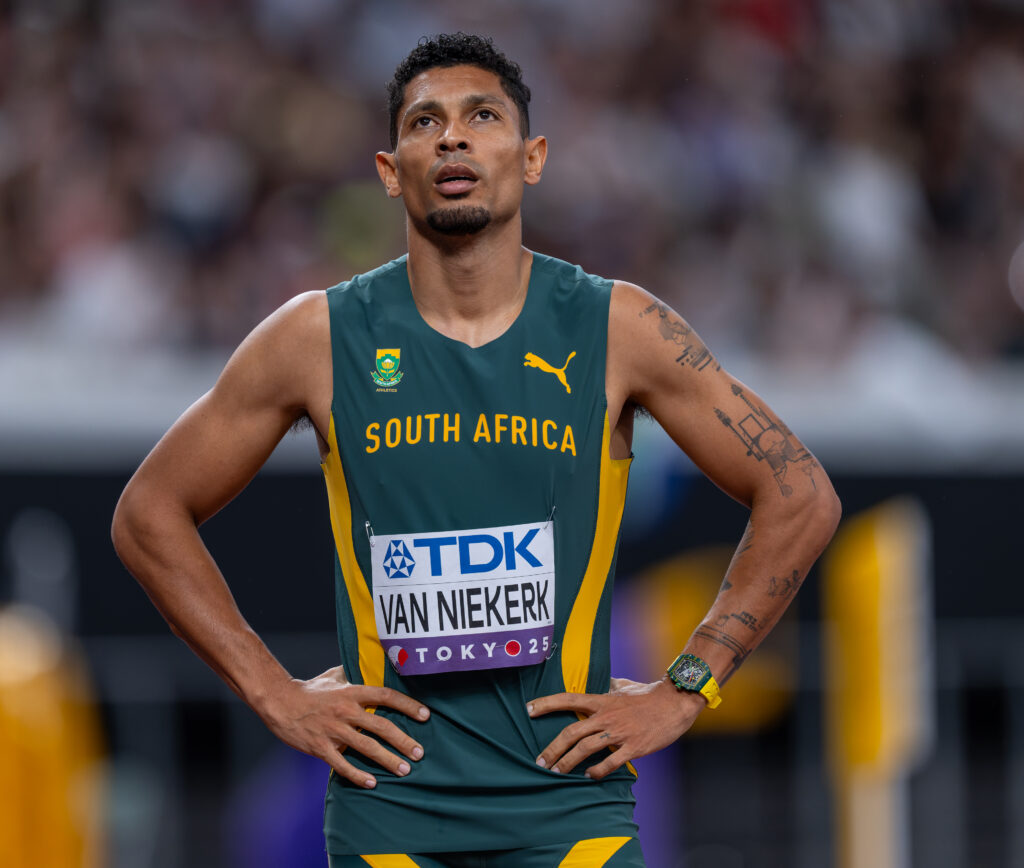
TOKYO, JAPAN - SEPTEMBER 18: Wayde van Niekerk of South Africa during the Men’s 200m Semi-Finals on day 6 of the 2025 World Athletics Championships Tokyo at Japan National Stadium on September 18, 2025 in Tokyo, Japan. (Photo by Anton Geyser/Gallo Images)
Chasing Auto-Qualification: Time to Target Records
While the newly released entry standards are undeniably tough, such as 9.95s for the men’s 100m, 10.96s for the women’s 100m, and a blistering 44.45s for the men’s 400m, this global benchmark should not deter our athletes.
These times are exacted on the entire world, not just South Africa. Instead of viewing these marks as insurmountable, our senior athletes should reframe their targets. Aiming for an automatic qualification now effectively means aiming to break South African and African continental records. Why shouldn’t our athletes aim that high? The pursuit of an auto-qualifying time will naturally drag our athletes’ standard up, ensuring that even if they miss the automatic mark, their resulting times will place them highly within the world rankings quota.
The Action Plan: Top-Down Alignment
At the 2025 World Championships in Tokyo, Team South Africa fielded 38 individual athletes across various disciplines, alongside four relay squads. While a solid representation, a nation with our depth of talent must always look forward.
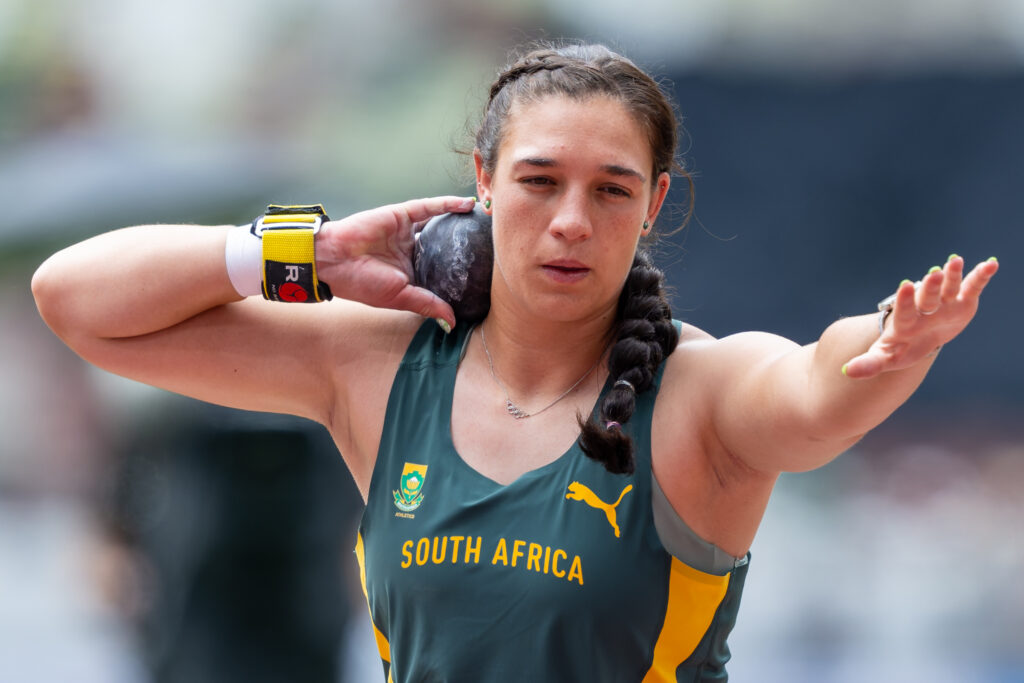
TOKYO, JAPAN - SEPTEMBER 20: Miné de Klerk of South Africa during the Women’s Shot Put qualifications on day 8 of the 2025 World Athletics Championships Tokyo at Japan National Stadium on September 20, 2025 in Tokyo, Japan. (Photo by Anton Geyser/Gallo Images)
To improve our contingent for Beijing, aiming realistically to push past the 48-athlete mark and ideally driving towards 60 athletes in the first-round starting blocks, we need a unified plan. This cannot be left to individual athletes operating in silos.
A coordinated strategy must flow from the ASA board level directly to the track. Local coaches need to be aligned with the national federation to construct domestic events that feed perfectly into the international ranking windows.
Marathon runners are already on the clock, with their 18-month window having opened in November 2025.
The 10,000m, combined events, and race walks opened their qualification windows in February 2026.
All other track and field events will open their windows on 23 August 2026.
The Relay Blueprint
If we need a blueprint for early execution, we need only look at our relay squads. Having witnessed the electric atmosphere and high-stakes racing on the ground at the World Athletics Relays in Gaborone recently, South Africa can take immense pride in knowing that three of our teams, the Men’s 4x100m, Men’s 4x400m, and Mixed 4x400m, have already bypassed the qualification anxiety and booked their spots for Beijing 2027.
They achieved this by placing in the top 12 at the World Relays, demonstrating exactly what happens when top talent is pooled, funded, and pointed at an international target.
The road to Beijing 2027 is paved with strict standards and a complex ranking matrix. For South African athletics, the blueprint is clear: chase national records, get on the international circuit, and align the coaching structures. The starting gun has fired.