Forty years to the exact day after Brian Mitchell stepped into a ring and captured the WBA World Championship on September 27, 1986, history repeated itself inside the Toyota Arena in Tokyo. After twelve gruelling, high-stakes rounds in hostile territory, South Africa’s Ricardo “Magic Man” Malajika defeated Japanese hometown favourite Tomoya Tsuboi via split decision (115-113 Tsuboi, 116-112 Malajika, 115-113 Malajika) to claim the vacant WBC World Super Flyweight title.
All week, Malajika promised to drag the decorated former amateur world champion into deep waters and steal his fans. On Sunday, in a bout defined by tactical shifts, crimson masks, and championship grit, the 28-year-old from Johannesburg delivered on every word.
Early Blood and High-Speed Chess
The tension inside the arena spilled over less than a minute into the opening frame. As both fighters tested the range, an accidental clash of heads split the top of Tsuboi’s scalp. Blood flowed immediately for the local fighter, though Malajika escaped unscathed.
Credit belonged to the Japanese corner prior to the second bell; their cutman stemmed the bleeding completely, allowing Tsuboi to settle into a blistering rhythm. Across the second and third rounds, the former amateur standout showcased dangerous hand speed and impeccable conditioning. Aggressively closing the distance to neutralize Malajika’s reach advantage, Tsuboi edged the early exchanges behind sharp right hands and a slightly higher work rate.
Malajika refused to be rushed. By the fourth round, the South African began timing Tsuboi’s entries, uncorking crisp counter left hooks and slicing uppercuts through the middle. While the fifth remained a razor-close battle of jabs and quick combinations, leaving the ringside impression that Malajika needed slightly more volume on the counter to match Tsuboi’s output, the “Magic Man” was quietly laying the traps for the second half of the fight.
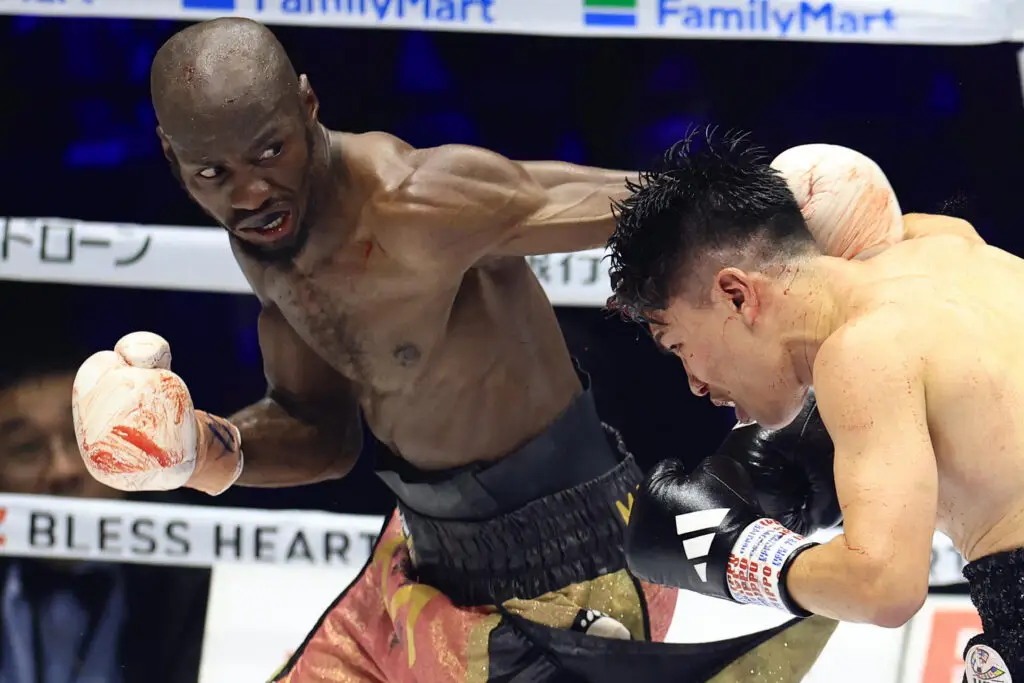
Ricardo MALAJIKA of South Africa, left, punches Tomoya TSUBOI of Japan during the 11th round of their vacant WBC world super flyweight title bout at Toyota Arena Tokyo in Tokyo, Japan, on September 27, 2026. ( The Yomiuri Shimbun via AP Images )
Dragging Tsuboi into Deep Waters
Before flying out of Johannesburg, Malajika predicted that rounds eight through ten would reveal the true champion. The tide actually turned a round earlier.
In the seventh, Tsuboi’s output noticeably dipped for the first time. Controlling the distance masterfully, Malajika punished the advancing Japanese fighter with heavy power shots and vicious uppercuts, claiming his most dominant frame of the bout. Another accidental headbutt opened a fresh cut above Tsuboi’s eye, compounding the hometown fighter’s problems.
Sensing his boxing rhythm was being dismantled, Tsuboi abandoned his in-and-out movement in the eighth. Like a completely different fighter from the first half of the contest, he began walking Malajika down, looking to suffocate the space on the inside and hunt for a single knockout blow. The tactical shift played directly into the South African’s hands; Malajika kept the bout at the end of his jab and repeatedly caught Tsuboi coming in with sharp uppercuts.
Yet, fighting on the road always carries its own peril. When the mandatory WBC open scoring was announced after the eighth round, the scorecards leaned in Tsuboi’s favour. If Malajika wanted the green and gold belt, he was going to have to take it in the championship rounds.
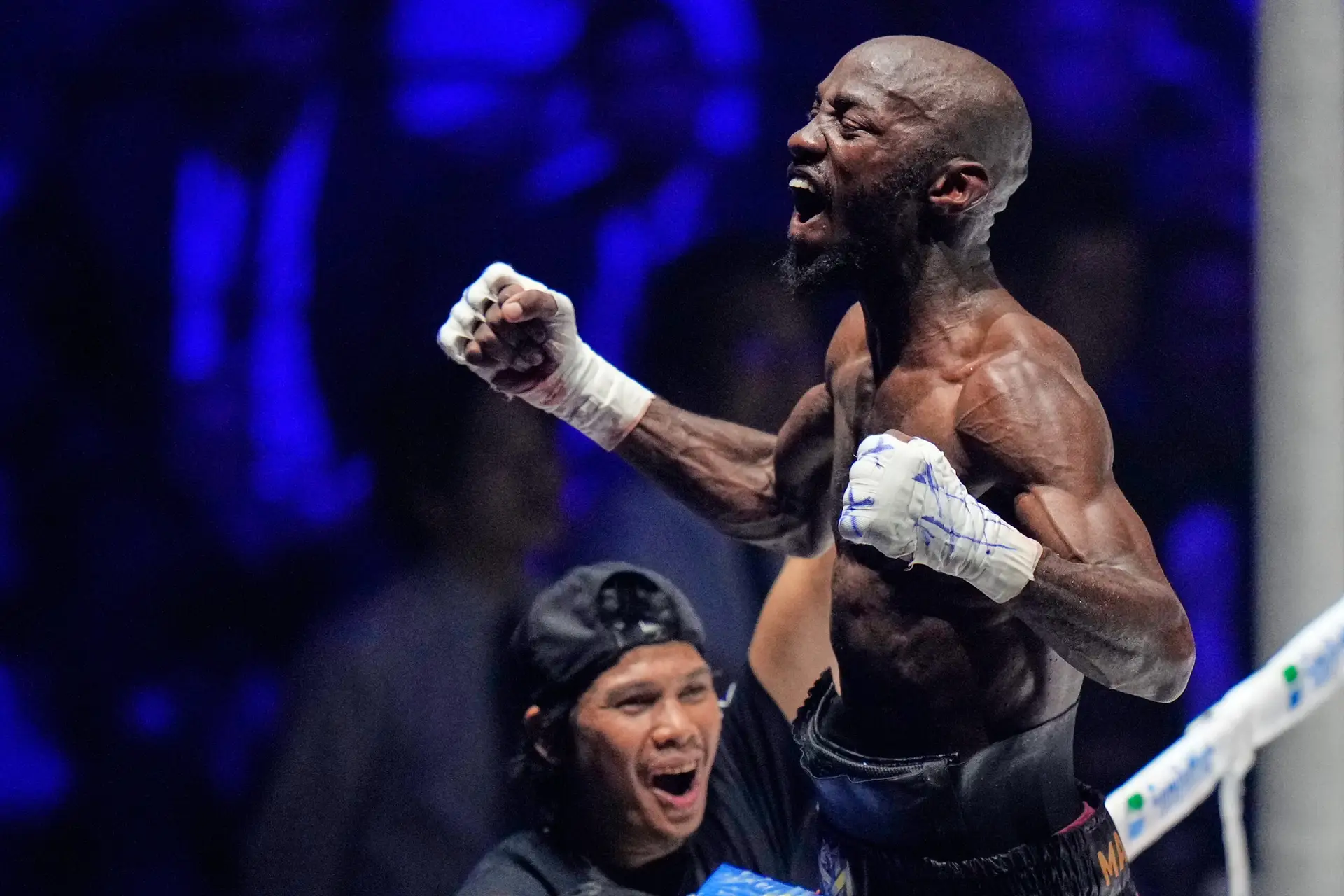
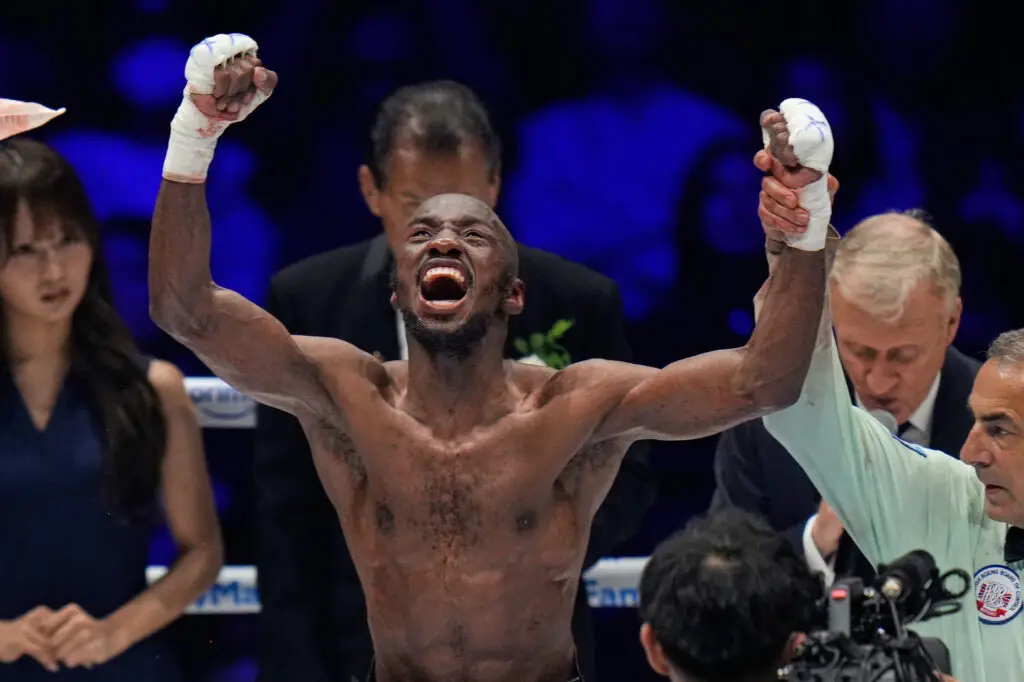
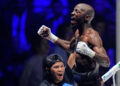
South Africa's Ricardo Malajika celebrates his victory over Japan's Tomoya Tsuboi after their WBC flyweight title boxing match in Tokyo, Sunday, Sept. 27, 2026. (AP Photo/Shuji Kajiyama)
"Let's Get a Big Round Here"
Demonstrating remarkable conditioning in only his fifth professional bout, Tsuboi found a second wind in a thrilling tenth round, rediscovering his movement as both men traded heavy right hands.
By the eleventh, fatigue began to show on Tsuboi again as his punches turned into lunges. While the primary concern for the South African camp was whether Ricardo was throwing enough volume to convince the ringside judges, Malajika erased all doubt in the final minute of the penultimate frame, unloading a series of stinging combinations to steal the round late.
With twelve minutes of history hanging in the balance before the final bell, Hall-of-Famer Brian Mitchell leaned through the ropes in the South African corner with one simple, urgent instruction: “Let’s get a big round here.”
Malajika answered the call like a true world champion. As Tsuboi charged out with desperate intent in the twelfth, Malajika stood his ground and fired back with ferocious counters that visibly snapped the Japanese fighter’s head back. Even as Tsuboi poured everything into a gutsy final twenty-second flurry, the contrast in conditioning was clear: Tsuboi had become flat-footed and one-dimensional, while Malajika was still bouncing on his toes, slipping shots and dictating the geometry of the ring until the final bell sounded.
South Africa's Ricardo Malajika celebrates his victory over Japan's Tomoya Tsuboi after their WBC flyweight title boxing match in Tokyo, Sunday, Sept. 27, 2026. (AP Photo/Shuji Kajiyama)
A Golden Era for South African Boxing
When the split decision was read out, 115-113 for Tsuboi overruled by tallies of 116-112 and 115-113 for the visitor, the South African corner erupted.
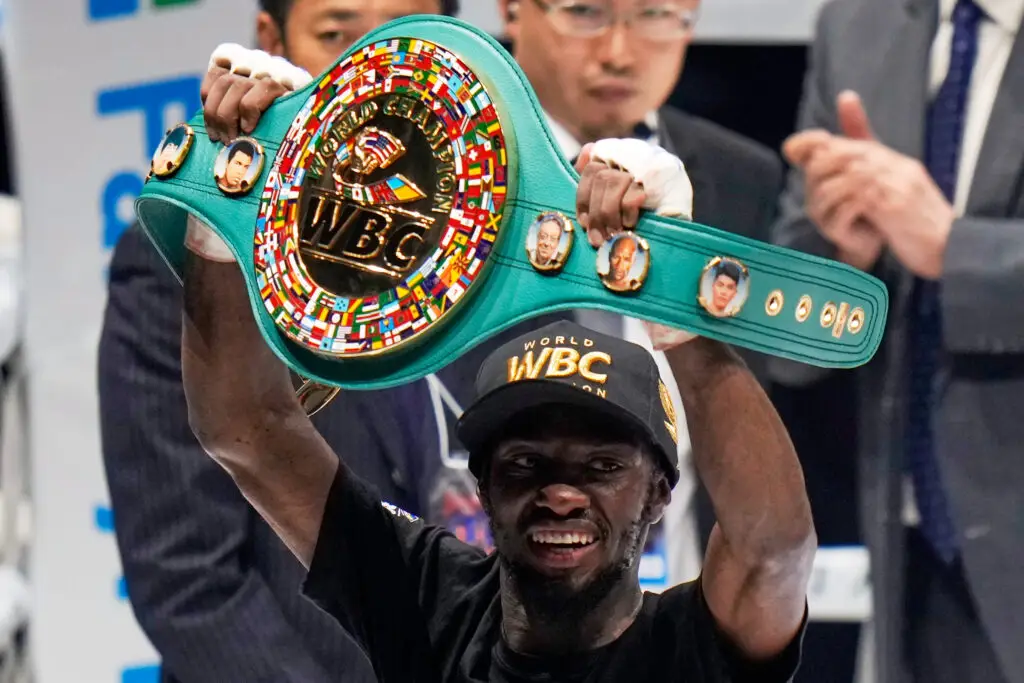
“The fight was tight, brilliant, and Tsuboi is a very tough fighter,” an emotional Malajika said in the aftermath, the iconic green and gold belt finally draped over his shoulder. “We both showed the crowd blood, sweat, and tears! I have come a long way from when I was seven years old. I owe a lot to boxing, it’s given me so much, and now I am a world champion.”
The victory cements an extraordinary milestone for South African boxing and the Brian Mitchell Boxing Academy. Head trainer Manny Fernandes and manager Brian Mitchell now boast two active WBC World Champions in their stable, with Malajika placing his new belt right alongside stablemate Siyakholwa Kuse’s minimumweight crown. Combined with reigning women’s champion Bernice “The Badger” Ferreira, South Africa now proudly stands on the global stage with three current WBC world titleholders.
Forty years after Mitchell conquered the world on the road, his and Manny Fernandez’s protégé walked into the bright lights of Tokyo, danced in the deep waters, and brought the green belt home.