A heavily rotated Springbok side fell agonisingly short of one of the greatest comebacks in Test rugby history on Sunday afternoon, going down 42-38 to a resurgent Wallabies outfit that finished the match with just 12 players on the park at Perth’s Optus Stadium. At one point, only having 11 men on the field.
Trailing by 25 points entering the final quarter, South Africa unleashed their star-studded replacements and forced Australia into total disciplinary meltdown. Four Wallabies, captain Harry Wilson, scrumhalf Ryan Lonergan, Joseph Suaalii, and Hunter Paisami, were sent to the sin bin in a frantic final 10 minutes. Yet, despite scoring three late tries to cut the deficit to four points, the clock ran out on the world champions, handing new Australian coach Les Kiss his sixth consecutive unbeaten Test.
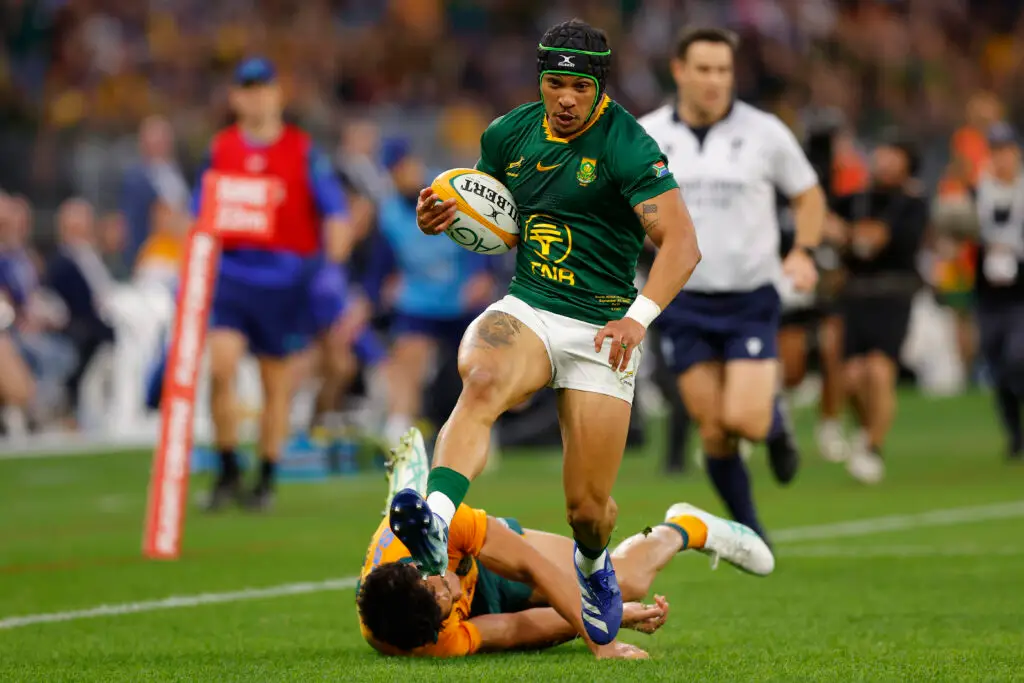
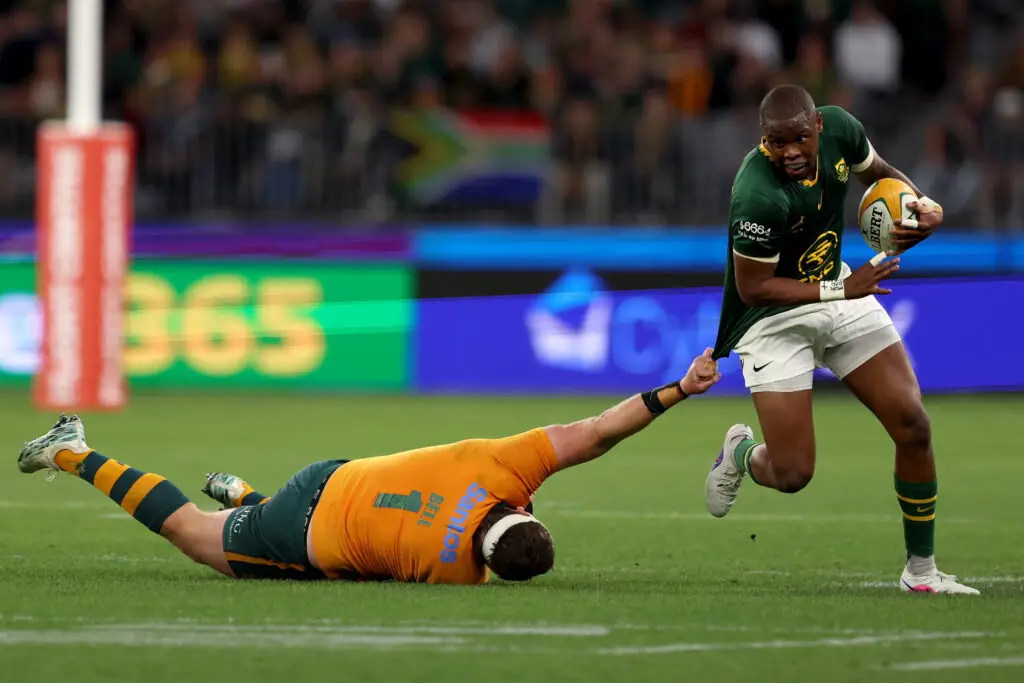
PERTH, AUSTRALIA - SEPTEMBER 27: Edwill van der Merwe of the Springboks runs in for a try during the Rugby Championship match between Australia Wallabies and South Africa Springboks at Optus Stadium on September 27, 2026 in Perth, Australia. (Photo by James Worsfold/Getty Images)
Rolling the Dice: A Seesaw Opening Half
Following the gruelling 3-1 series triumph over the All Blacks in Baltimore, Springbok head coach Rassie Erasmus rolled the dice by making 13 changes to his starting fifteen, handing the captain’s armband to inside centre Andre Esterhuizen while stacking the bench with front-line regulars as an insurance policy.
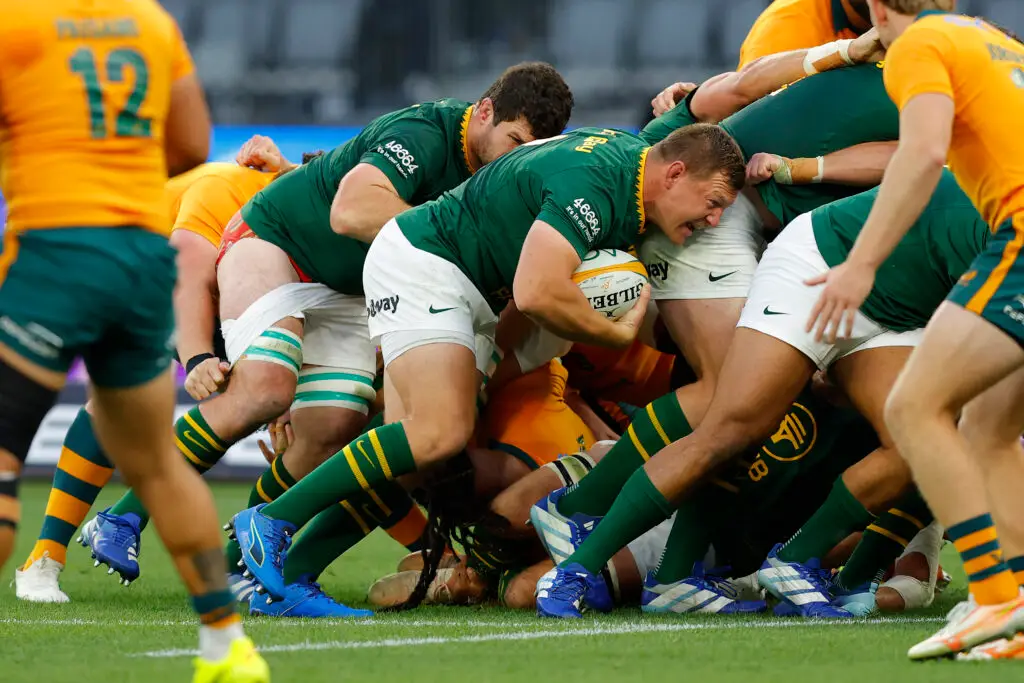
Initially, the fringe combinations held their own. After Handré Pollard and Lonergan traded early penalties, South Africa struck first through their trademark rolling maul, with Bulls hooker Johan Grobbelaar dotting down to give the visitors the early ascendancy.
However, the rust in South Africa’s defensive system soon showed. Wallabies outside centre Len Ikitau turned the game on its head with two tries in the space of three minutes—the first from close range, and the second off a chaotic restart where Suaalii disrupted the aerial contest and regathered the bounce for Ikitau to finish.
The Springboks answered immediately to lock the scoreboard at 17-17 when Pollard fired a pinpoint cutout pass to expose the Australian edge, allowing winger Edwill van der Merwe to burn the cover defence. Just before the interval, though, a clever cross-field kick from Tom Wright put Max Jorgensen into space; 14 patient phases later, flyhalf Ben Donaldson strolled over unopposed in the corner to send the hosts into the shed leading 24-17.
PERTH, AUSTRALIA - SEPTEMBER 27: Johan Grobbelaar of the Springboks drives towards the try line during the Rugby Championship match between Australia Wallabies and South Africa Springboks at Optus Stadium on September 27, 2026 in Perth, Australia. (Photo by James Worsfold/Getty Images)
The Wallabies Pull Away Before the Chaos
When Lonergan slotted a penalty eight minutes into the second stanza to stretch the lead to 10, Erasmus wasted no time, emptying all eight replacements off the bench at once.
Before the ‘Bomb Squad’ could find its rhythm, Australia delivered a ruthless 15-minute blitz. Lonergan added another three-pointer in the 54th minute before Wallabies skipper Harry Wilson tapped a quick penalty near the try line and muscled over just shy of the hour mark. Moments later, a spilled ball by Canan Moodie allowed Jorgensen to scoop up the loose possession and sprint 60 metres untouched, blowing the scoreline out to a stunning 42-17 after 65 minutes.
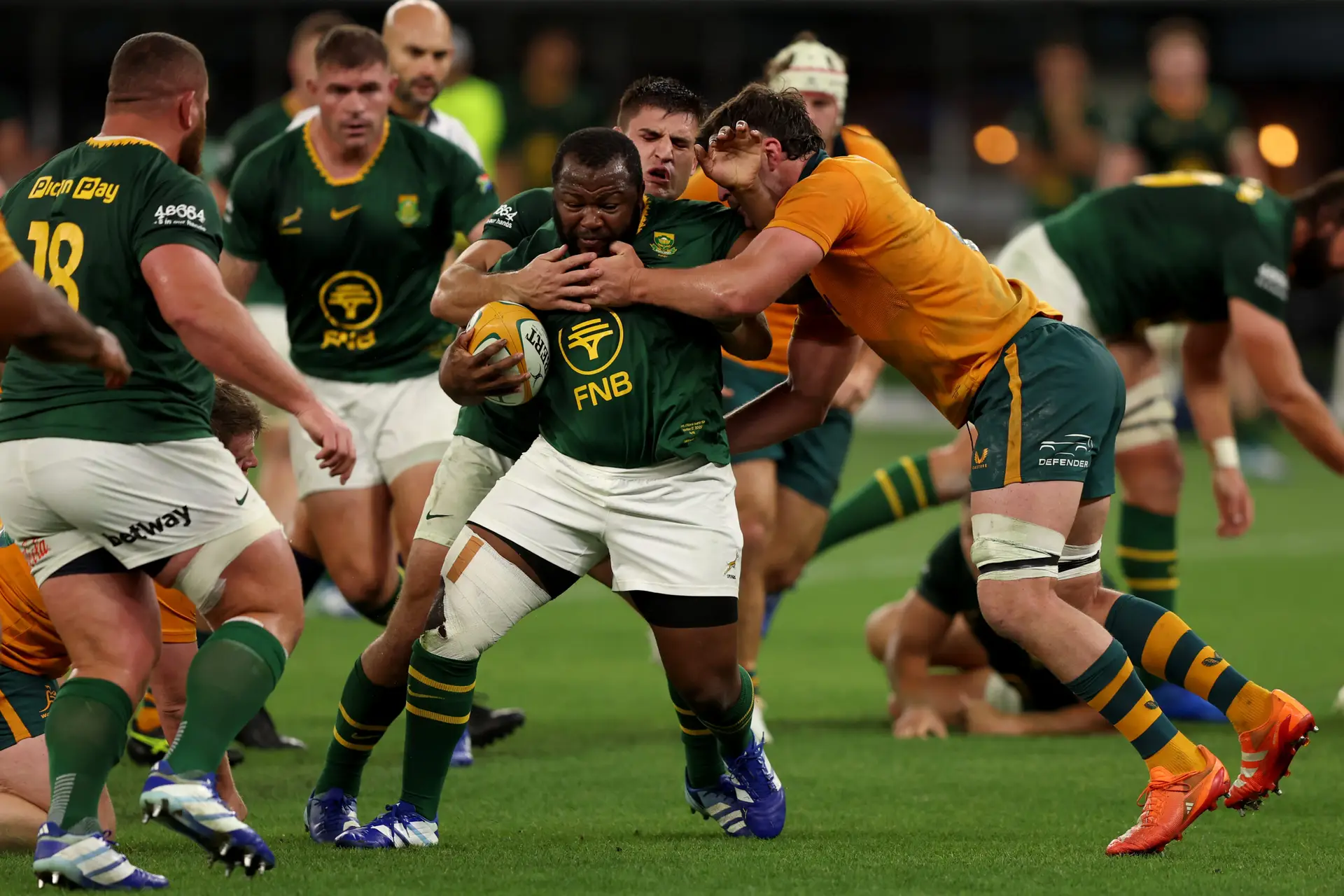
Then came the mayhem. As South Africa battered the Australian line, the hosts buckled under the relentless physical pressure, conceding penalty after penalty. As Wilson, Lonergan, Suaalii, and Paisami were marched to the touchline in quick succession, the Springboks piled on tries through scrumhalf Morné van den Berg, powerhouse prop Ox Nche, and a penalty try.
With Australia clinging on with 11 men, the Boks ran out of time just four points shy of a miraculous heist.
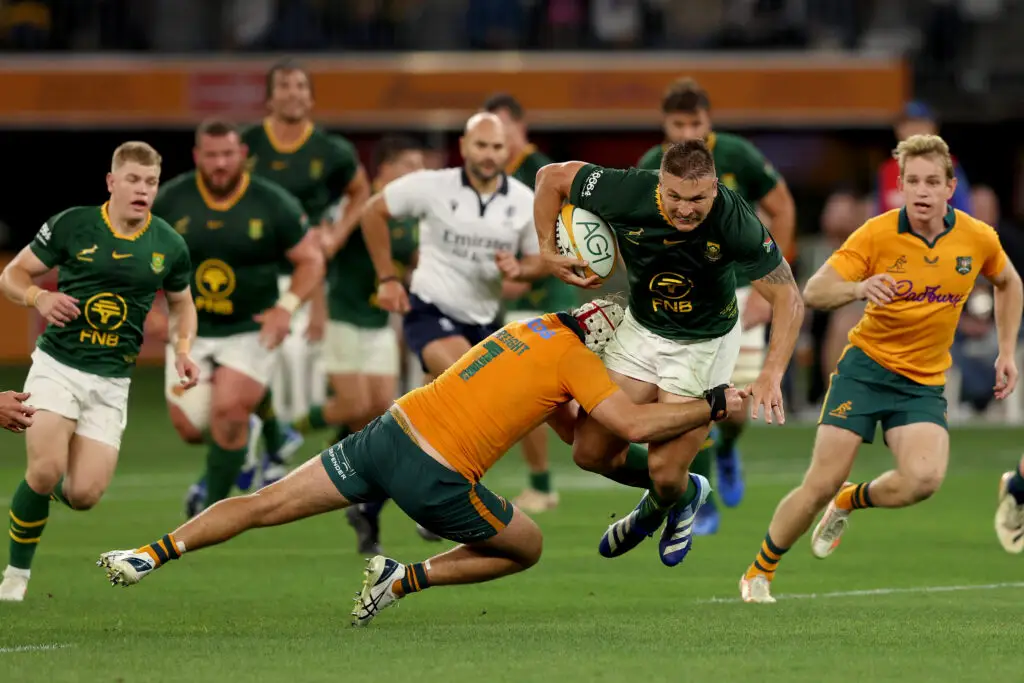
PERTH, AUSTRALIA - SEPTEMBER 27: Andre Esterhuizen of the Springboks is tackled during the Rugby Championship match between Australia Wallabies and South Africa Springboks at Optus Stadium on September 27, 2026 in Perth, Australia. (Photo by Janelle St Pierre/Getty Images)
"We Have Nobody Else to Blame"
Speaking after the match, both Erasmus and stand-in skipper Esterhuizen refused to hide behind the rotational selections or stadium technology glitches that saw the match clock occasionally fail to stop.
“When you’re 25 points behind, there’s nobody else to blame but yourself,” Erasmus said frankly. “We rolled the dice a bit, and some guys haven’t played a lot together in a long time, but it’s not an excuse. We didn’t play well enough tonight to beat a stronger team.”
Esterhuizen echoed his coach’s assessment, pointing to a disjointed defensive effort and poor discipline during the middle 40 minutes: “We let them in too much, and it hurt us. Proud of the fight at the end, but we should be better and not get into such situations.”
While the defeat stings, the fixture offered vital reconnaissance on Australian soil just 12 months out from the 2027 Rugby World Cup, giving Erasmus a clear look at both his squad depth and an increasingly dangerous host nation.
PERTH, AUSTRALIA - SEPTEMBER 27: Aphelele Fassi of the Springboks is tackled during the Rugby Championship match between Australia Wallabies and South Africa Springboks at Optus Stadium on September 27, 2026 in Perth, Australia. (Photo by Janelle St Pierre/Getty Images)