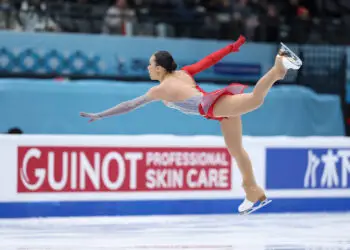
Sitting in sixth place after the Short Program at the Diamond Spin 2026 in Katowice, Poland, South African figure skater Gian-Quen Isaacs found herself at a familiar crossroads. The pressure was mounting, the gold medal seemed distant, and a stacked field of European contenders stood between her and the podium.
A year ago, that kind of pressure might have been overwhelming. But the 2026 version of Isaacs is a different athlete.
Relying on a steely new mental approach, the 21-year-old Capetonian delivered a commanding Free Skate that catapulted her to the top of the leaderboard, finishing with an overall score of 152.73 to secure gold. In doing so, she became the first South African female figure skater to win the prestigious international Diamond Spin event, edging out Switzerland’s Sayra Bessire (151.78) and Poland’s Karolina Bialas (151.40).
“Being in sixth after the Short Program was not where I wanted to be, but I knew although the other competitors are phenomenal athletes, the competition was far from over,” Isaacs said following her historic victory. “I had two choices: allow the pressure to define me or use it as fuel to show the world what’s possible from a South African.”
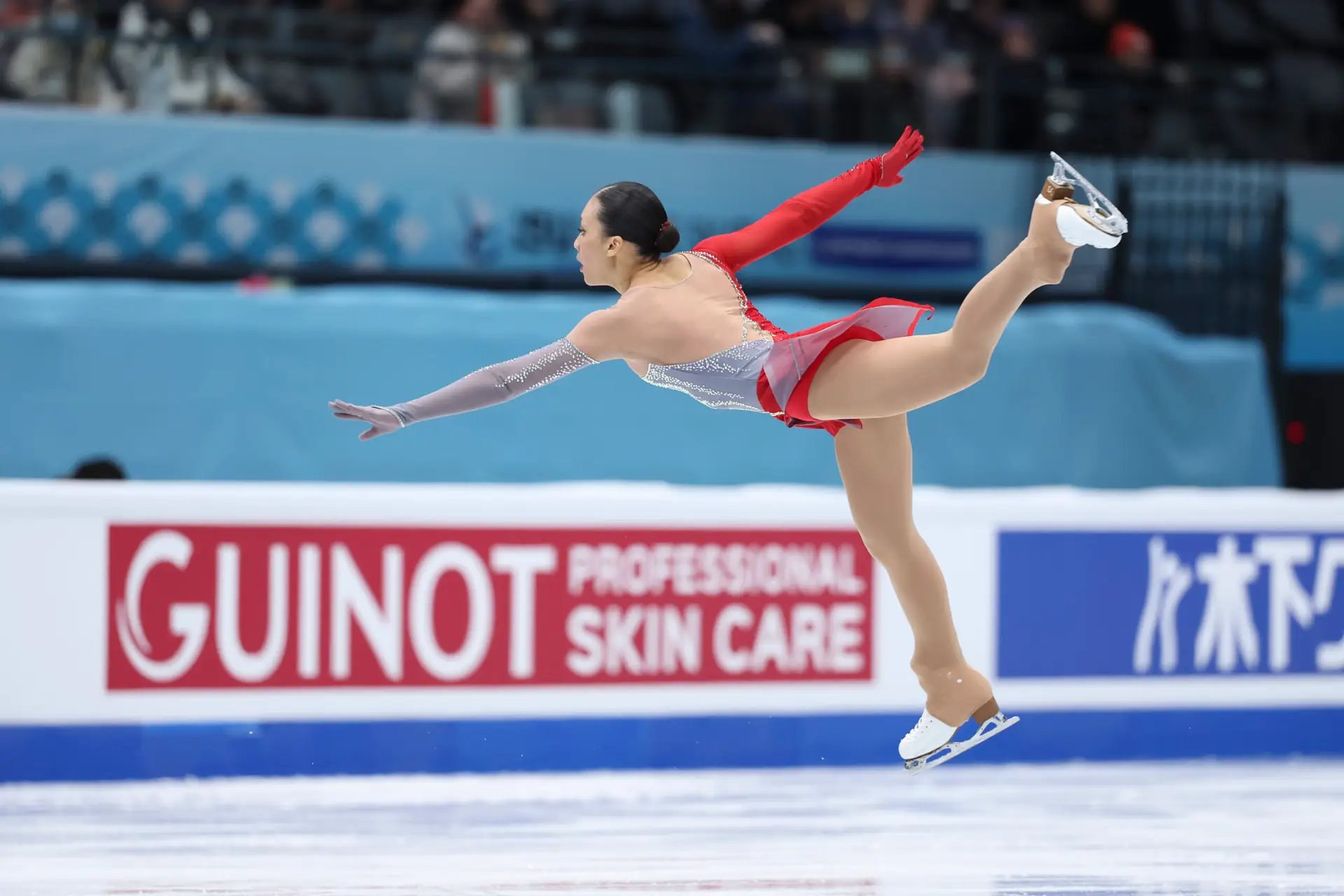
BEIJING, CHINA - JANUARY 23: Gian-Quen Isaacs of South Africa competes in the Women's Free Skating during the ISU Figure Skating Four Continents Championships 2026 at National Olympic Stadium on January 23, 2026 in Beijing, China. (Photo by Emmanuel Wong - International Skating Union/International Skating Union via Getty Images)
Forged in the Fire of Beijing
To understand the magnitude of Isaacs’ triumph in Poland, one has to look back at the emotional crucible she endured in late 2025.
During the Olympic Qualifiers in Beijing, Isaacs faced a whirlwind of administrative uncertainty, fighting an initial non-selection just to get onto the ice. She ultimately placed 15th, posting what was then a personal-best international score. While she didn’t secure a quota spot for Milano-Cortina 2026 at that specific event, the experience fundamentally changed her relationship with the sport.
“The Olympic Qualifiers were an emotional roller coaster, and there were moments that tested my confidence, my patience, and my resilience,” Isaacs reflected. “But those experiences taught me lessons that no medal ever could. I learned that one result does not define my worth, that setbacks are not the end of the story, and that progress is not always visible on a scoreboard.”
Splitting her training between the demanding elite facilities of Bergamo, Italy, and the shared public ice of Cape Town, Isaacs has spent the last year working intensely with her coaches, Megan Allely-Painczyk and Ondřej Hotárek. But her most significant evolution hasn’t just been in her jumps or spins—it has been entirely mental.
“My biggest growth has been learning to separate my performance from my identity,” she explained. “I can have a difficult skate without losing faith in myself. I can feel nervous and still fight. I can experience disappointment and still show up the next day ready to work. That is what makes this victory so meaningful.”
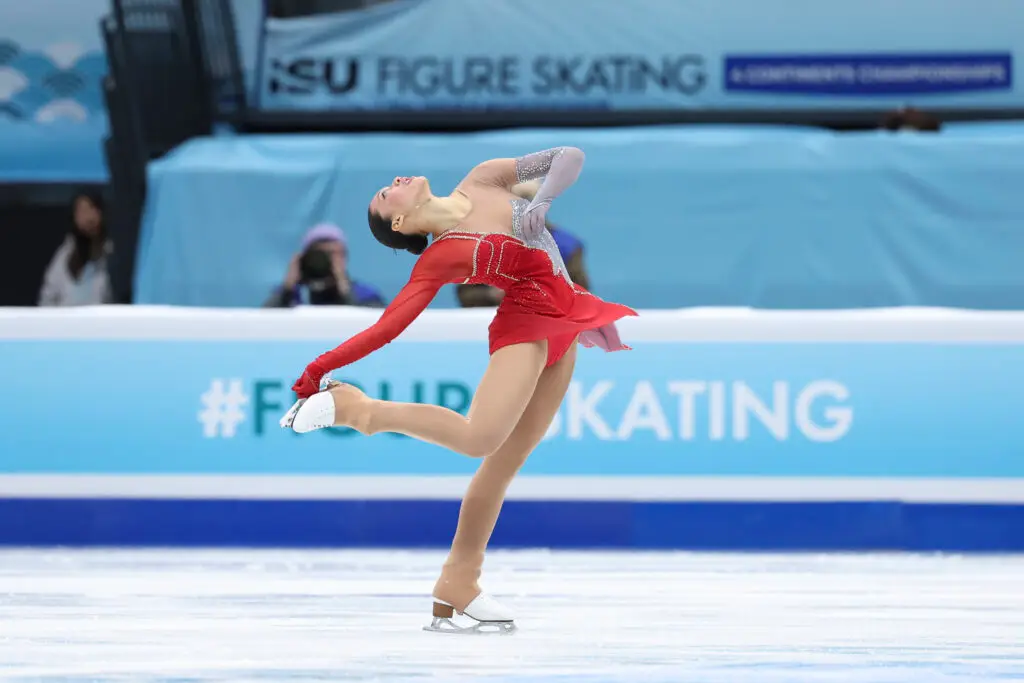
BEIJING, CHINA - JANUARY 23: Gian-Quen Isaacs of South Africa competes in the Women's Free Skating during the ISU Figure Skating Four Continents Championships 2026 at National Olympic Stadium on January 23, 2026 in Beijing, China. (Photo by Emmanuel Wong - International Skating Union/International Skating Union via Getty Images)
Performance Over Pressure
That mental fortitude was put to the ultimate test after the Short Program in Katowice. Trailing five other skaters, Isaacs leaned heavily on a mantra inspired by South African swimming legend Chad le Clos and refined by her mental coach: performance over pressure.
Instead of agonizing over the points gap, she narrowed her focus to the ice beneath her skates.
“I couldn’t change what had happened in the Short Program, but I could choose how I approached the Free Skate,” she said. “I focused on my preparation, trusted my training, and worked on staying mentally present rather than allowing the standings to overwhelm me. For me, performance over pressure means giving my best in the moment and trusting that the results will follow.”
The results followed in spectacular fashion. Her Free Skate was an inspired masterclass in composure, allowing her to claw her way to the top of the podium and make South African winter sports history.
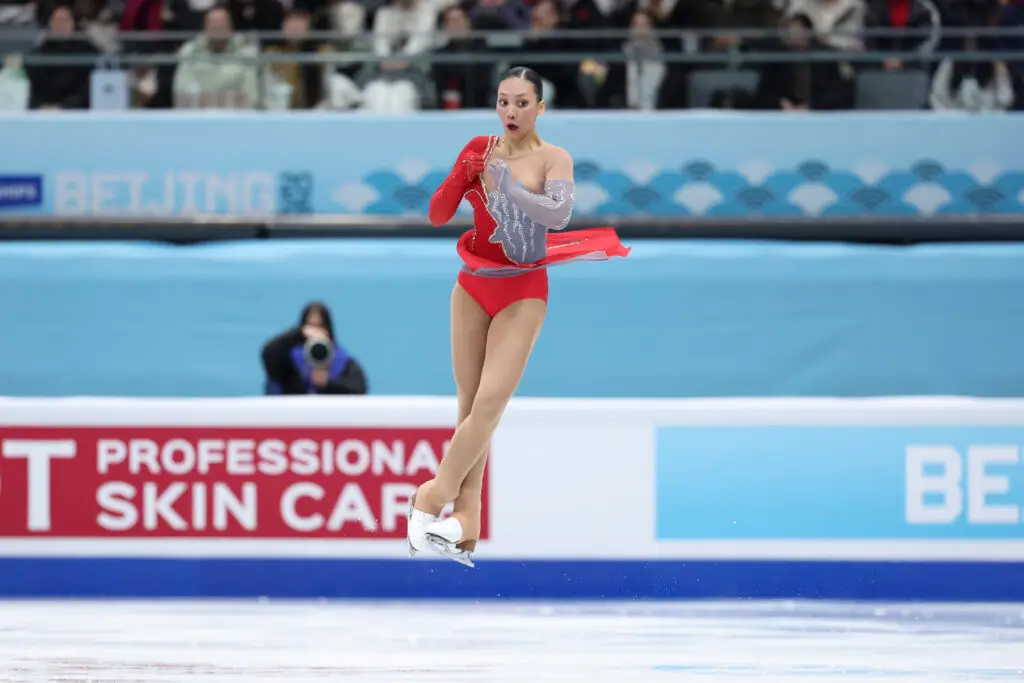
BEIJING, CHINA - JANUARY 23: Gian-Quen Isaacs of South Africa competes in the Women's Free Skating during the ISU Figure Skating Four Continents Championships 2026 at National Olympic Stadium on January 23, 2026 in Beijing, China. (Photo by Emmanuel Wong - International Skating Union/International Skating Union via Getty Images)
Carrying Ubuntu Onto the Ice
For Isaacs, figure skating has never been a solitary pursuit. In a nation where traditional sports like rugby, cricket, and soccer dominate the headlines, succeeding in a “Cinderella sport” requires a pioneer’s mindset.
She views her gold medal not just as a personal triumph, but as a beacon for the next generation of African skaters.
“Becoming the first South African female figure skater to win the Diamond Spin event is an honour that I carry with immense pride, because I know that when I step onto the ice internationally, I represent more than just myself,” Isaacs noted. “Ubuntu is at the heart of how I see this achievement. It reminds us that we are who we are because of one another. Behind every performance are sacrifices, encouragement, guidance, and people who help you keep going when you feel like giving up.”
Her ultimate goal is to dismantle the idea that South African athletes cannot compete with traditional European and Asian winter sports powerhouses.
“I hope this victory shows the next generation that you do not have to come from a traditional figure skating powerhouse to dream big, compete internationally, and make history,” she said. “Sometimes, you have to be the first so that others can see what is possible. This medal belongs to me, but the meaning behind it belongs to South Africa.”
The Foundation, Not the Finish Line
With the 2026–2027 season now underway, Isaacs has set a high benchmark. However, she is quick to point out that the Diamond Spin gold is merely a stepping stone toward her larger ambitions, which include the Senior World Championships and securing a spot at the Winter Olympics.
“I don’t see it as the finish line. I see it as a foundation for everything I want to achieve next,” Isaacs concluded. “The goal is no longer simply to prove that I belong; it’s to keep evolving, to compete with courage, and to see just how far I can take this journey. This victory is a chapter in my story, not the final page. And I believe my best skating is still ahead of me.”