The Springbok Women faced a ruthless attacking masterclass from the Black Ferns on Saturday afternoon, falling 52-20 in the opening clash of the highly anticipated FNB Stadium double-header.
While the Soweto crowd was treated to a spectacular showcase of running rugby ahead of the men’s Rugby Championship decider, the South African women will rue missed opportunities against a New Zealand side that played a quarter of the match with 14 players. Despite conceding an immense 18 penalties and receiving four yellow cards, the world champions proved too clinical out wide, running in eight tries to South Africa’s four.
Set-Piece Dominance vs. Open-Play Brilliance
The narrative of the match was set early: South Africa’s brute force up front against New Zealand’s blistering transition attack.
The Black Ferns struck with terrifying speed, opening the scoring in the second minute through Elinor-Plum King following a quick tap. Just eight minutes later, Braxton Sorensen-McGee sliced through a gap on a 55-metre run to put the visitors 12-0 up.
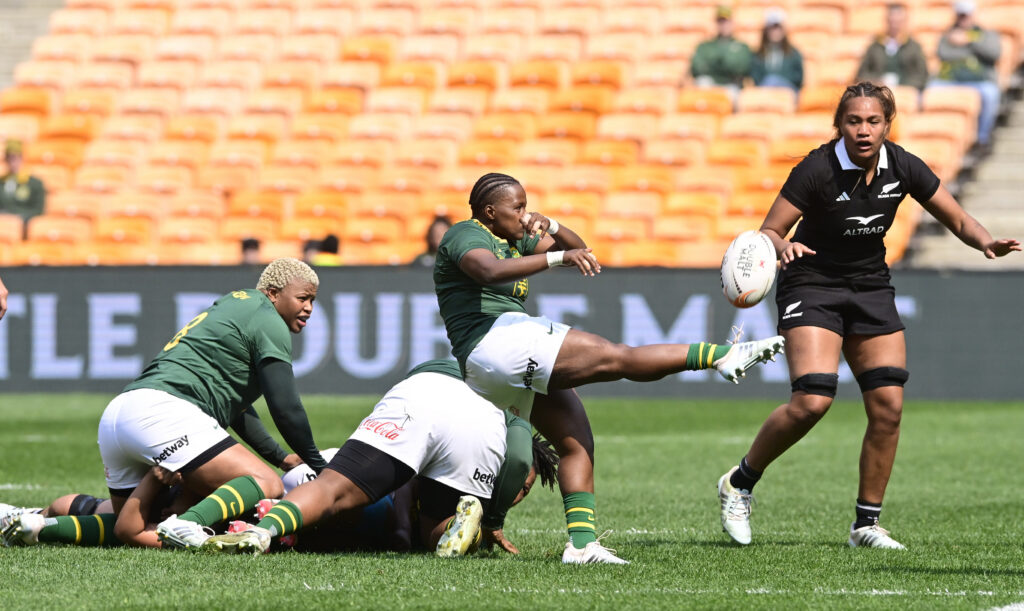
JOHANNESBURG, SOUTH AFRICA - SEPTEMBER 05: Unam Tose of South Africa box kicks during the Women's International test match between South Africa and New Zealand at FNB Stadium on September 05, 2026 in Johannesburg, South Africa. (Photo by Sydney Seshibedi/Gallo Images)
However, the Springbok Women found their rhythm through their traditional weapon, the set piece. Boasting a 100% scrum win rate and totally obliterating the New Zealand pack on multiple occasions, South Africa used a rolling maul in the 14th minute to drive Lindelwa Gwala over the line.
The pressure began to tell on New Zealand’s discipline. After Mererangi Paul was sent to the sin bin for a deliberate knock-down, South Africa capitalized. Aphiwe Ngwevu powered across the line from close range in the 31st minute to close the gap to just two points at 12-10.
Yet, New Zealand’s ability to strike right before the break proved devastating. Tries from Chryss Viliko and a second from Sorensen-McGee in added time gave the Black Ferns a commanding 24-10 cushion at halftime.
Second Half: The Black Ferns Pull Away
South Africa emerged from the tunnel with intent. When Vainah Ubisi burrowed low to score in the corner in the 49th minute, coinciding with a yellow card to Ayesha Leti-I’iga for collapsing a maul, the deficit was cut to nine.
Instead of buckling under the numerical disadvantage, New Zealand shifted gears. Maia Joseph hit back instantly, darting through a gap in the 51st minute. The Black Ferns’ ability to keep the ball alive in contact and exploit spaces out wide saw them take absolute control. Elinor-Plum King grabbed her second, followed by a powerful close-range effort from Ayesha Sititi.
JOHANNESBURG, SOUTH AFRICA - SEPTEMBER 05: Danelle Lochner of South Africa wins possession during the Women's International test match between South Africa and New Zealand at FNB Stadium on September 05, 2026 in Johannesburg, South Africa. (Photo by Sydney Seshibedi/Gallo Images)
The try of the match came in the 75th minute. A slick backline move starting inside New Zealand’s half saw Justine McGregor carve open the midfield before offloading perfectly in the tackle to Maia Vaipulu, who surged under the posts.
Ubisi showed incredible strength to secure her second try of the match in the dying moments for South Africa, but by then, the game was well beyond reach.
Key Takeaways for the Springbok Women
There are distinct positives for captain Babalwa Latsha and her squad to take from this historic non-World Cup encounter. The South African scrum was destructive, winning all nine of their feeds and forcing multiple penalties. Furthermore, they disrupted New Zealand’s lineout and managed a solid 76% tackle completion rate.
However, the inability to capitalize on New Zealand’s severe disciplinary issues, highlighted by yellow cards to Paul, Georgia Ponsonby, Leti-I’iga, and Vaipulu, ultimately cost them. South Africa also struggled off the kicking tee, with Byrhandre Dolf missing all four conversion attempts, leaving eight critical points out on the pitch.
JOHANNESBURG, SOUTH AFRICA - SEPTEMBER 05: Macaela Samboya of South Africa with the ball during the Women's International test match between South Africa and New Zealand at FNB Stadium on September 05, 2026 in Johannesburg, South Africa. (Photo by Sydney Seshibedi/Gallo Images)
The Black Ferns’ sheer volume of attack (172 passes to South Africa’s 117, and 11 line breaks to 3) ultimately overwhelmed the brave home defence.
As the Soweto crowd turns its attention to the Springboks and All Blacks, the Springbok Women will look to rebuild and refine their backline defence, taking valuable lessons from 80 minutes against the world’s best.