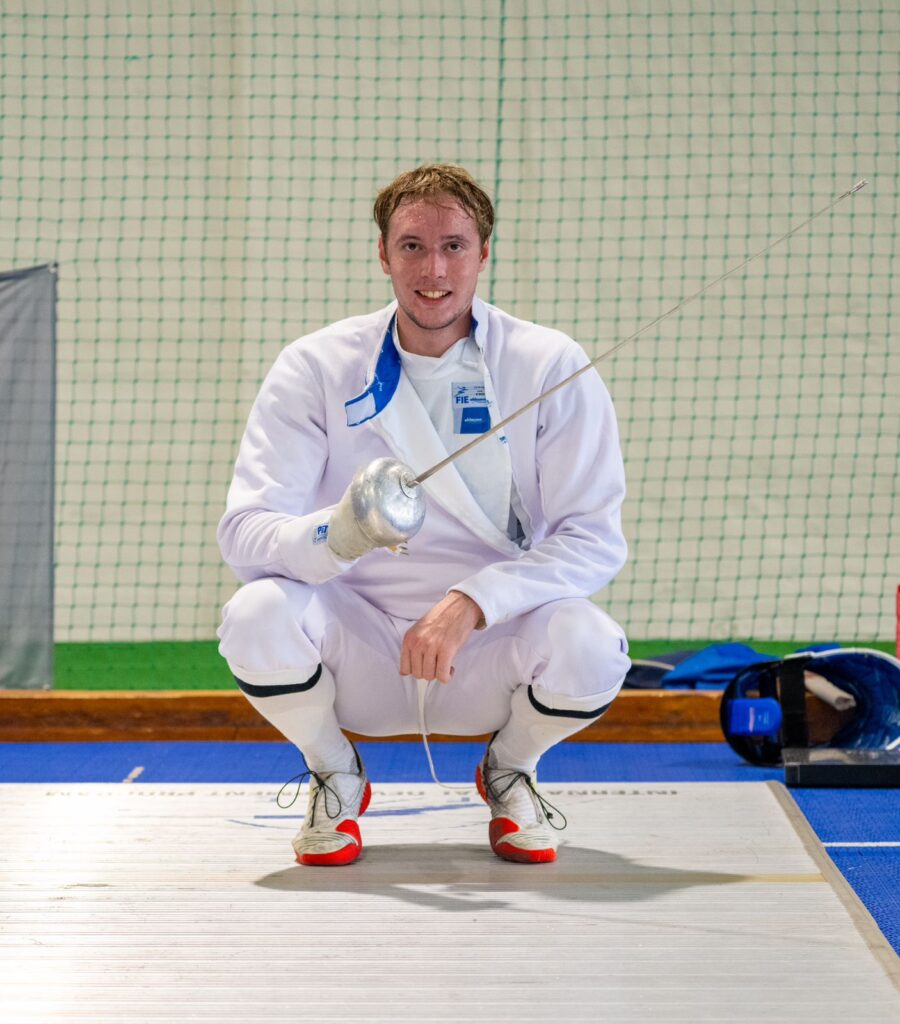
South African men’s épée champion Christiaan Bester has built his career on equal measures of talent, determination, and belief. At just 23 years old, he has already established himself as the country’s leading fencer, a national champion, and an athlete with the ambition to carry South African fencing into the international spotlight.
Early Beginnings and Natural Talent
Bester first picked up a sword at the age of eight after his father — himself a wrestler — encouraged the family to try the sport together. From the start, fencing captivated him in a way no other sport could. Competing at his local club, Bester often sparred against older, more experienced fencers. “I kind of always knew I had it,” he recalled. “Even as a kid I could see mistakes and give advice to seniors. They didn’t always take it well, but I knew I could achieve something special.”
By 13, he was already competing internationally, representing South Africa at the Commonwealth Championships in the under-17 category. Though he didn’t win, he impressed by pushing top-ranked fencers to the limit — losing by a single point to the eventual bronze medallist from Wales. Shortly after, he claimed gold at the African Championships in the under-17 category and silver in juniors, signalling the start of a promising international career.
Rising Through the Ranks
Over the years, Bester’s progress was marked by steady improvement and key results. His sharp footwork, intelligent distance control, and mental resilience became defining features of his fencing style. At the 2025 South African National Championships, he cemented his status as the nation’s number one, defeating close rival Rahul van Manen in a tense final.
That rivalry soon turned into a partnership as Bester, Van Manen, and Olympic fencer Harry Saner joined forces to represent South Africa at the 2025 World University Games in Rhine-Ruhr, Germany.
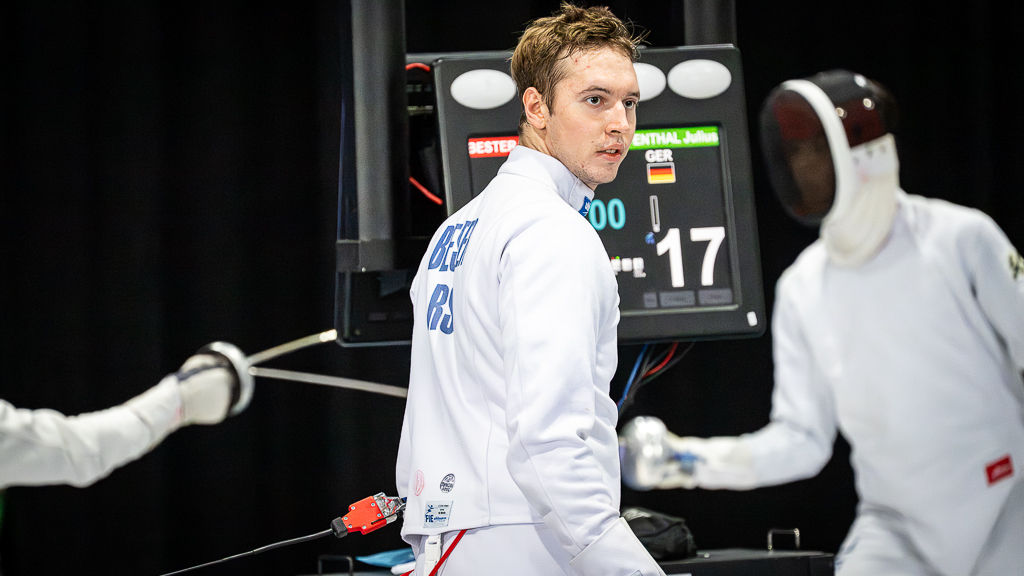
South African Fencing Athlete and Current National Champion Christiaan Bester that will represent the country at the 2025 FISU World University Games in Germany. Image Credit: Sport South Africa
World University Games: Experience and Growth
For Bester, the Games were a first — and a formative experience. “It was my first University Games and I really enjoyed the atmosphere,” he said. “Training against so many top-level athletes before the competition made me realize I had to bring my absolute best to the piste. It was exciting, but also intimidating at first — and on the competition day, I felt ready.”
Bester impressed in the group stage of the individual épée competition, finishing with a 4–2 record and advancing directly into the knockout rounds. Though his campaign ended narrowly in the Table of 64 with a 12–15 loss to Ukraine’s Mykhailo Krasniuk, he took valuable lessons from the experience. “Even though I didn’t win, it felt like a victory,” he explained. “In my heart I knew I was good enough, and that belief won’t change regardless of the result.”
Two days later, he returned alongside Saner and Van Manen for the team event — where South Africa produced one of their most memorable results in recent years.
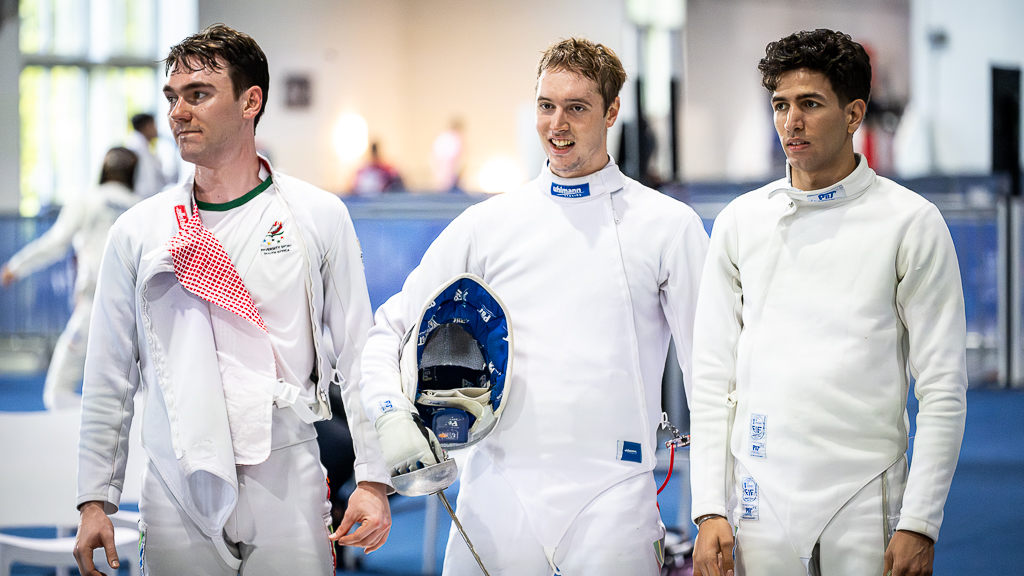
South Africa’s men’s fencing trio of Harry Saner, Rahul van Manen, and Christiaan Bester delivered a noteworthy performance in the team épée event at the 2025 FISU World University Games. The team recorded a hard-fought win against hosts Germany in the Table of 32 before exiting the competition against Hungary in the next round. Image Source and Credit: Sport South Africa
Beating Germany, Testing Hungary
Drawn against hosts Germany in the Table of 32, the South Africans stunned the home crowd with a composed 45–38 victory. Bester played a crucial role, landing decisive touches in the opening and closing bouts to set the tone and secure the win. “It was a good feeling, actually doing it and not just believing we could,” he said. “We told ourselves we could beat them — and we did.”
Though their run ended in the Round of 16 against Hungary, the performance gave the trio confidence that they belonged among stronger nations. For Bester, it was also a chance to show the growth of South African fencing on the global stage.
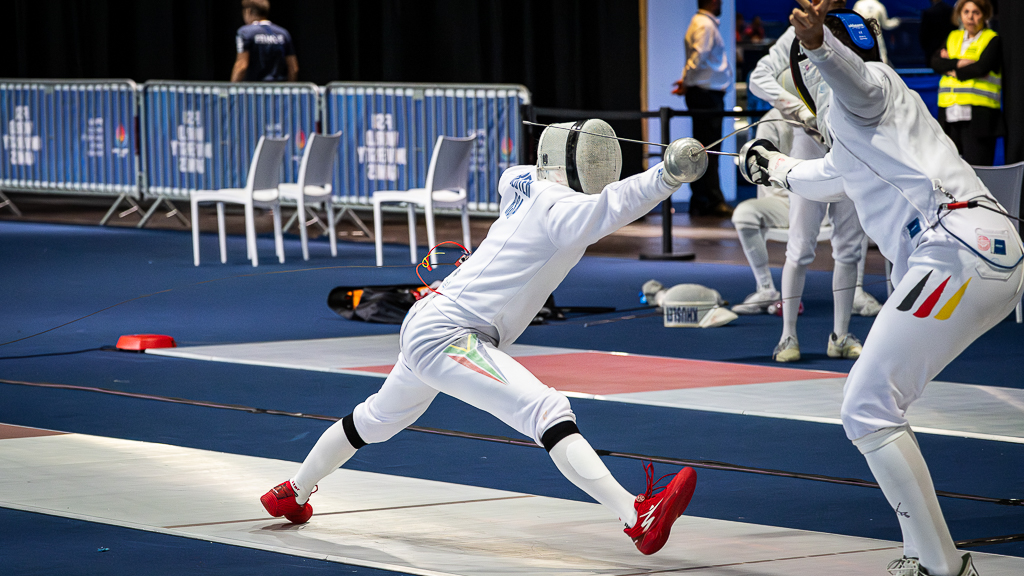
South African men’s épée champion Christiaan Bester has built his career on equal measures of talent, determination, and belief. At just 23 years old, he has already established himself as the country’s leading fencer and a national champion. Image Source: Sport South Africa
The Grind Behind the Mask
Away from competition, Bester maintains an intense training schedule of around 16 hours per week, balancing gym sessions, running, and fencing drills. He is equally focused on recovery, which he considers essential. “Fencing is more taxing on the nervous system than most people realize,” he said. “You need proper sleep, stretching, and recovery tools to avoid burnout.”
He also works on his mental game — incorporating breathing exercises and even listening to scripture between bouts. “Mental preparation for me means practicing presence — staying fully in the moment,” he explained. “There’s a poem I come back to, The Man in the Glass. My goal is to be able to look at that man and say, ‘We’re good.’”
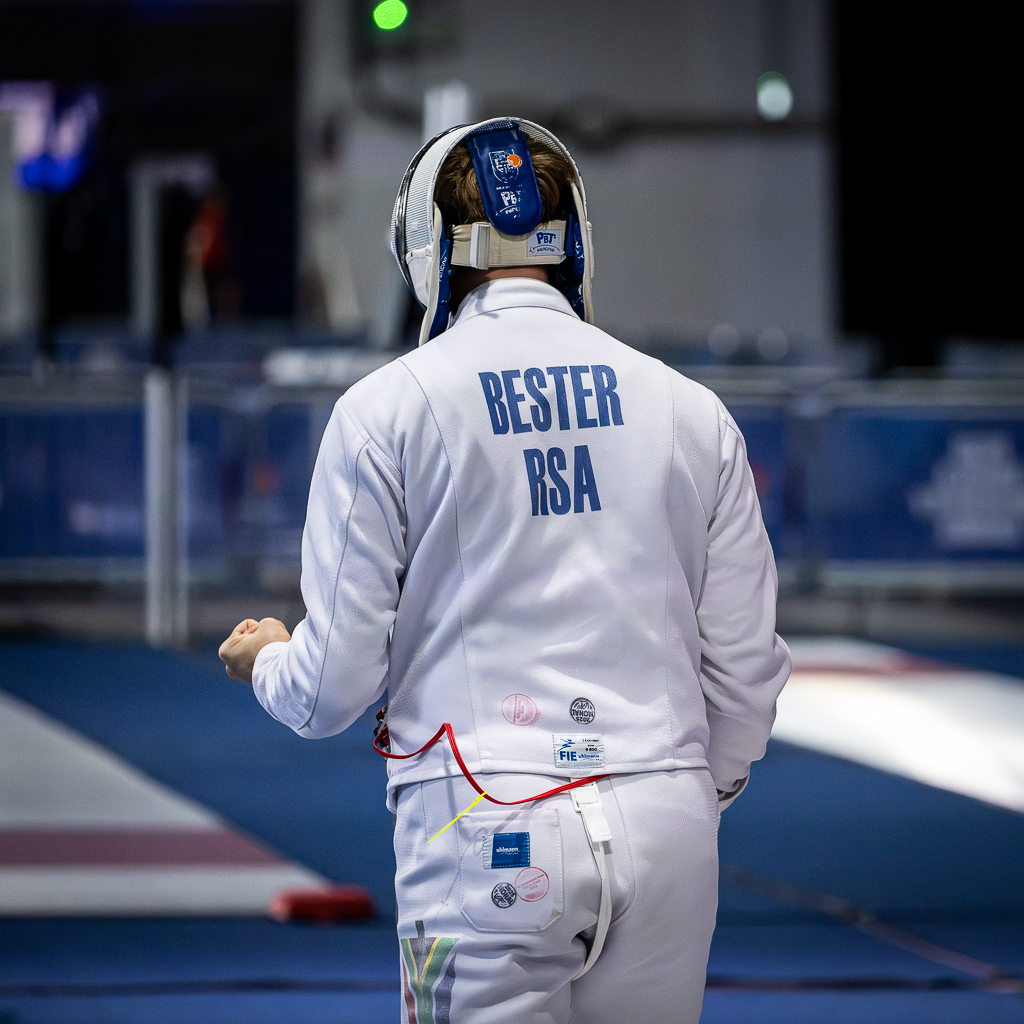
South African men’s épée champion Christiaan Bester has built his career on equal measures of talent, determination, and belief. At just 23 years old, he has already established himself as the country’s leading fencer and a national champion. Image Source: Sport South Africa
Looking Ahead
As the reigning South African champion, Bester’s immediate ambition is to defend his national title while gaining more international experience. He hopes to compete in smaller FIE events before building up to World Cups — stepping stones toward even bigger goals. The Olympics, he admits, remain a dream. “There are only 36 fencers in the world who qualify. I believe I’m good enough to get there, but I don’t see it as my only measure of success. It would be something exciting to achieve — but my focus is on bringing my best to every stage I get.”
Building a Legacy
Beyond medals, Bester is motivated by the chance to leave a mark on fencing in South Africa. “I think fencing has huge potential if it gets more exposure,” he said. “Like Formula 1, it could become very popular if people got to know the athletes and the stories behind them.”
He also hopes to inspire the next generation. “Fencing is strategic, demanding, and incredibly rewarding. It taught me focus and discipline, and I’d recommend it to anyone. I want to be approachable for younger fencers, someone they can come to for advice. That’s the legacy I want to start building.”
South African men’s épée champion Christiaan Bester has built his career on equal measures of talent, determination, and belief. At just 23 years old, he has already established himself as the country’s leading fencer and a national champion. Image Source: Sport South Africa
Conclusion
From his early days at a local club to becoming South African champion and representing his country at the World University Games, Christiaan Bester’s journey is one of belief, resilience, and ambition. With his eyes set on new international challenges, he is not just chasing personal success — he is carrying the hopes of a growing fencing community eager to see the sport rise on South African soil.