
ENGHIEN-LES-BAINS, France — If a boxing match were judged strictly by the ink scribbled on three scorecards, you might look at Thursday night’s unanimous decision victory for Milan Prat and assume you know what happened inside the Salle du Casino. You would see a home favourite doing what home favourites do, surviving, outworking, and getting his hand raised in front of a partisan French crowd.
You would be entirely, unequivocally wrong.
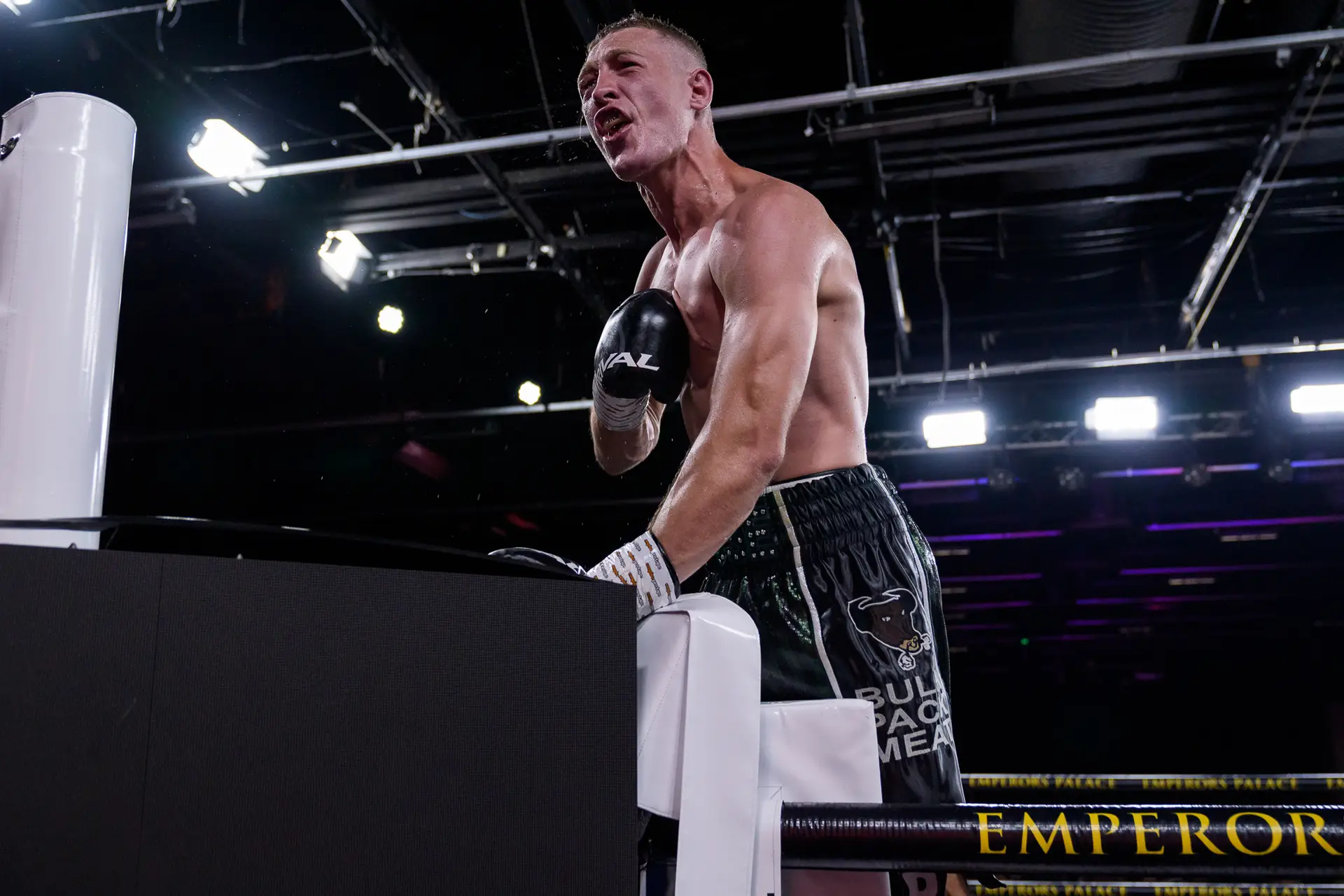
What unfolded north of Paris was not a routine title tilt; it was a cinematic bloodletting. It was the kind of Shakespearean drama that only boxing can produce, a fight where two men pushed each other past exhaustion, dragged one another into the deep ocean, and refused to drown. For 36 blistering minutes, Brandon Thysse stood on the precipice of history, seeking to become South Africa’s first-ever junior middleweight world champion. He didn’t get the belt. But what he gave the sport, and what he took out of Milan Prat, belongs in the annals of South African prize fighting lore.
Flash Knocks and Survival Instincts
From the opening bell, the air inside the venue crackled with that unmistakable, claustrophobic tension of a world title fight. Thysse settled early, taking the centre of the ring and edging the first round with calculated ring generalship. By round two, the South African’s timing clicked. Thysse unloaded a heavy barrage that sent Prat staggering to the canvas, a legitimate knockdown in the eyes of everyone in attendance, save for the referee, who inexplicably ruled it a slip.
The sport’s cruelty surfaced seconds later. Spurred by survival instincts, Prat whipped a ferocious counter left hook out of nowhere. It landed flush on Thysse’s chin. The Germiston warrior hit the deck hard.
Lesser men fold under that kind of sudden violence. But the veteran savvy that saw Thysse through three brutal wars with Roarke Knapp took over. Getting to his feet, clear-eyed but compromised, Thysse tied Prat up in a desperate clinch as the Frenchman roared forward for the kill, weathering the tempest until the bell offered a brief reprieve.
Through rounds three, four, and five, Prat capitalized on the opening. Controlling the distance with crisp combinations, the Parisian appeared to be pulling away while Thysse focused on clearing the cobwebs, biding his time, and waiting for the tide to turn.
The Mid-Fight Inferno
In round six, the tide didn’t just turn; it became a tidal wave.
Refusing to let the bout slip into a rhythmic European boxing match, Thysse bit down on his gumshield and closed the distance, suffocating Prat’s space and unleashing heavy leather inside the pocket. Prat, suddenly out of his comfort zone, began to wilt.
Then came the thunderbolt.
A straight right hand from Thysse detonated square on Prat’s jaw, folding the French star to the canvas. The arena fell dead silent. Just as Thysse had done four rounds earlier, Prat showed immense heart, clutching, holding, and moving to survive the remainder of the round.
Round seven was sheer devastation. Scenting destiny, Thysse walked Prat down with ruthless intent. Prat had barely recovered from the sixth-round shellacking when Thysse connected again, dropping him for another count. The referee counted, Prat rose on unsteady legs, and Enghien-les-Bains held its collective breath. Prat looked finished.
The assault continued into the eighth. Thysse uncorked another flush right hand, dropping Prat to the floor once more. But with the championship slipping violently from his grasp, Prat resorted to the darkest trick in the veteran playbook: a sickening low blow that folded Thysse over in agony.
Moments later, as Thysse tried to reassert his momentum, Prat strayed low again. It was a cynical, blatant tactic designed to buy time and break the South African’s rhythm. Incredibly, the referee declined to deduct a point, a catastrophic officiating oversight that completely altered the trajectory of the bout.
Heartbreak in the Championship Rounds
The low blows accomplished what Prat’s fists could not: they stole the wind from Thysse’s sails.
By round nine, the momentum had violently swung back. Prat, granted a fresh lease on life, stepped up his output, throwing combinations while Thysse, visibly drained from the body assault, found himself hunting for a single fight-ending shot instead of stringing together his earlier combinations.
The championship rounds, ten, eleven, and twelve, were a grueling slugfest of will. Both men were operating on sheer muscle memory and heart. In the tenth and eleventh, Prat relied on relentless volume and busy counters, while Thysse fired concussive singular bombs that rocked the Frenchman whenever they connected.
Heading into the twelfth and final round, both corners knew the truth: without a knockout, the cards in France were unlikely to favor the visitor. With forty seconds remaining, both men threw caution to the wind, standing toe-to-toe in the center of the ring, trading hooks to the body and head until the final bell echoed.
When the final bell sounded, there were no losers in the ring, only two exhausted, swollen warriors who had emptied their souls on the canvas.
The Decision and the Legacy
When the judges announced a unanimous decision for Milan Prat, it felt almost anti-climactic. A scorecard simply cannot capture what transpired: the uncalled knockdown in round two, the resurrection in rounds six, seven, and eight, the unpunished low blows, and the sheer grit of two athletes pushed to the very brink of human endurance.
Brandon Thysse leaves France without the vacant IBO belt, but his reputation has never stood taller. He ventured into the backyard of a 30-win champion, dropped him three times, survived being dropped himself, and took the fight of his life to the absolute limit.
In a sport where belts are easily manufactured and forgotten, performances like this are immortal. Thysse may not be coming home with the gold, but he proved beyond any shadow of a doubt that he belongs at the pinnacle of the world stage.
For More South African Sports News: Sport South Africa Home Page