South Africa has been drawn into Group A for the 2026 FIFA World Cup, setting the stage for a thrilling but daunting campaign against co-hosts Mexico, European qualifiers Czechia, and Asian powerhouse South Korea.
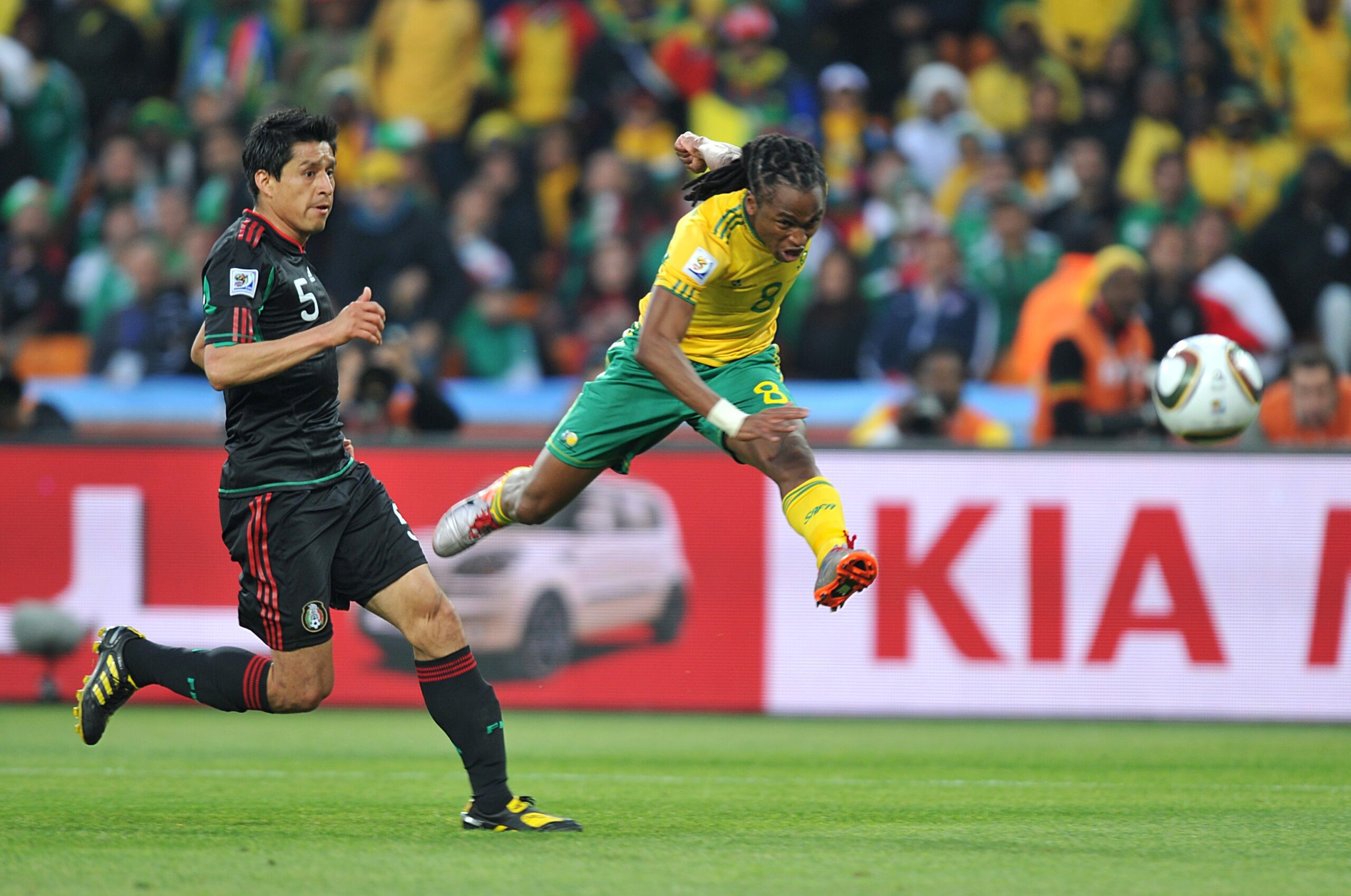
For Bafana Bafana, the tournament opener will carry heavy echoes of 2010. Sixteen years after the two nations played out a memorable 1-1 draw at the FNB Stadium to kick off Africa’s first World Cup, they will meet again on opening day. This time, however, the roles are reversed; South Africa must walk into a hostile cauldron of 80,000 passionate fans at the iconic Estadio Azteca in Mexico City.
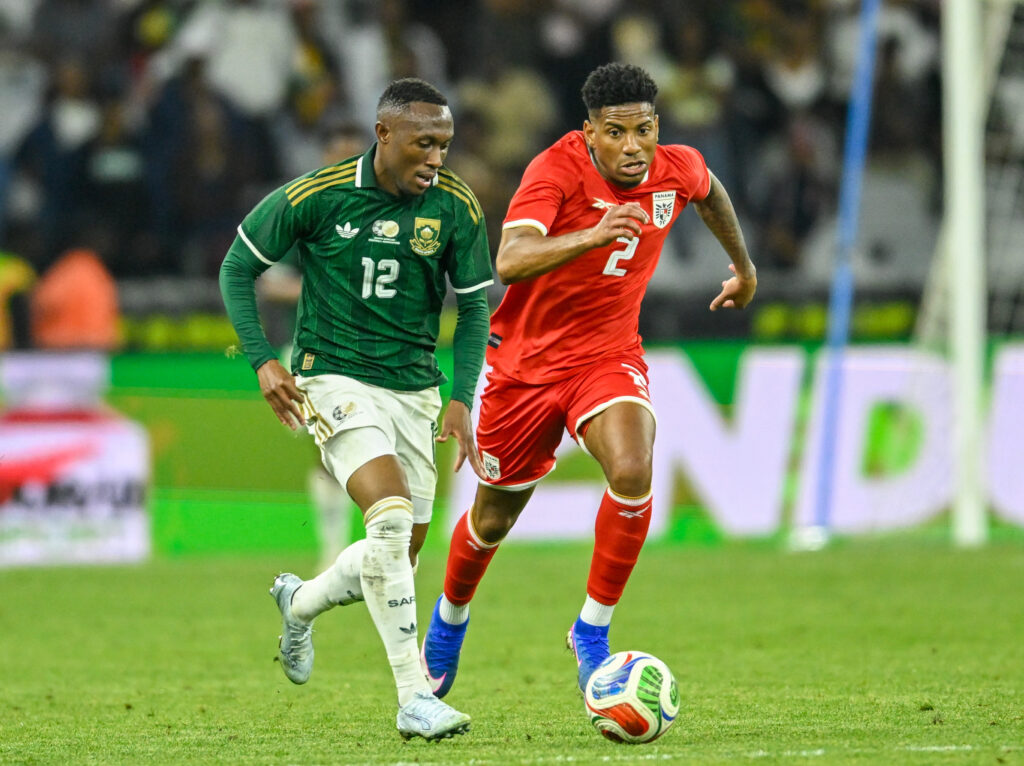
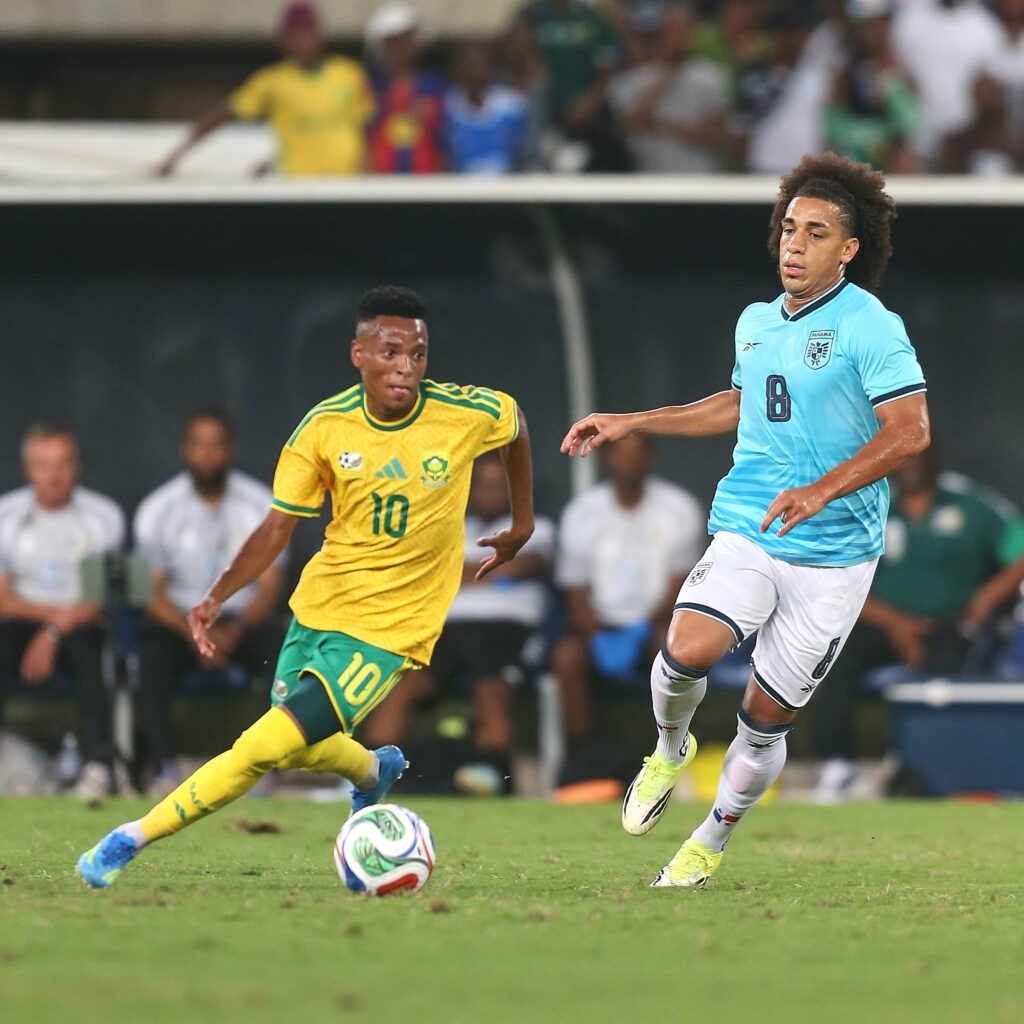
CAPE TOWN, SOUTH AFRICA - MARCH 31: Thapelo Maseko of South Africa and JOSE CORDOBA of Panama during the International Friendly match between South Africa and Panama at DHL Stadium on March 31, 2026 in Cape Town, South Africa. (Photo by Ashley Vlotman/Gallo Images)
The logistical demands of the group stage will also severely test the squad. Following the opener, South Africa will cross the border to face Czechia at the Atlanta Stadium on June 18. Six days later, the team must travel back down to Mexico for their final group fixture against South Korea.
The coaching staff has been clear regarding the tournament mandate: progress to the knockout stages. Historically, advancing from a World Cup group requires a minimum of four points. This means South Africa must target at least one win and one draw from these three challenging encounters. To secure safe passage, Bafana Bafana will need to navigate three wildly contrasting tactical styles.
The Hostile Opener vs. Mexico
Recent friendlies against Panama offered South Africa a brief glimpse of Central American football, but the 15th-ranked Mexicans bring a significantly sharper edge. Mexico will look to execute counter-attacks with blistering speed, relying on slick, accurate passing to slice through defensive lines. For a South African side currently hovering around 60th in the world rankings, the primary objective must be absorbing early pressure and neutralizing rapid transitions.
Beyond the tactics, the environment itself is an opponent. The high altitude of Mexico City will ruthlessly test South Africa’s stamina. Managing the tempo of the game—slowing it down rather than getting drawn into an exhausting track meet—will be crucial. If Bafana Bafana can maintain a rigid defensive structure and frustrate the co-hosts early, the immense pressure of a home World Cup could become a double-edged sword, potentially turning the expectant crowd against their own team.
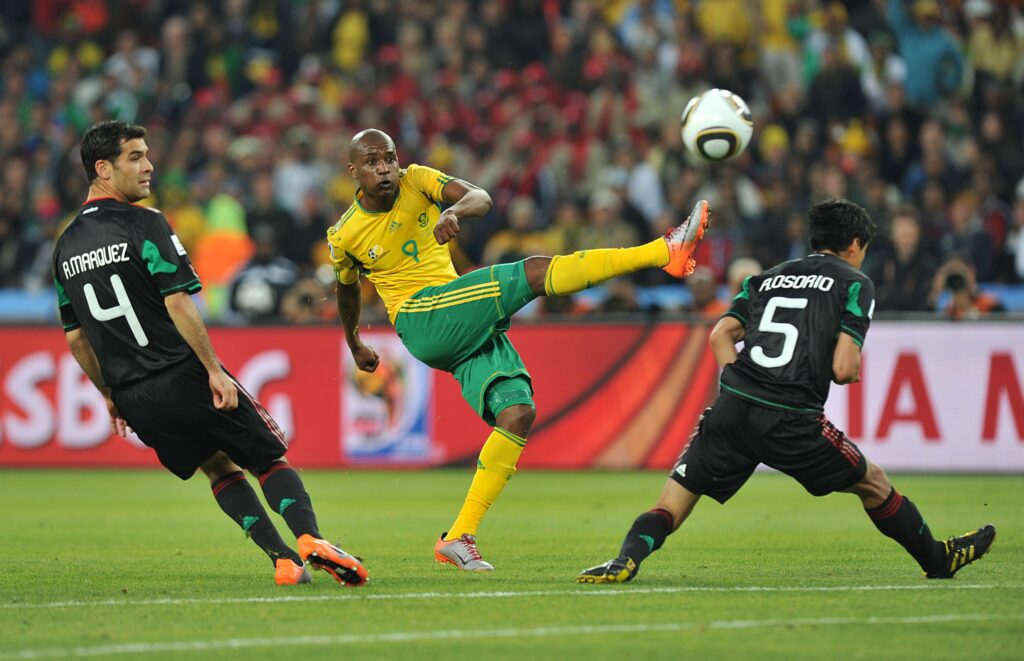
South Africa's Katlego Mphela (centre) shoots under pressure from Mexico's Rafael Marquez (left) and Ricardo Osorio (right) (Photo by Martin Rickett/PA Images via Getty Images)
The European Test vs. Czechia
Match two presents a whiplash-inducing shift in style. The 41st-ranked Czechs trade Latin flair for rigid European pragmatism, structure, and precision. Czechia’s qualifying campaign was a rollercoaster, highlighted by a shocking 2-1 defeat to the 123rd-ranked Faroe Islands. Yet, they showed immense resilience, surviving back-to-back penalty shootouts against the Republic of Ireland and a heavily favored Danish side in the playoffs.
South Africa’s technical team must treat the Faroe Islands tape as the ultimate blueprint, studying exactly how a massive underdog exposed the cracks in the Czech armor. Czechia’s rigid structure often comes at the cost of mobility; they can be slow to turn and vulnerable to raw pace during defensive transitions. If South Africa can isolate the Czech fullbacks and utilize explosive speed down the flanks, they can bypass a heavy midfield and force critical errors.
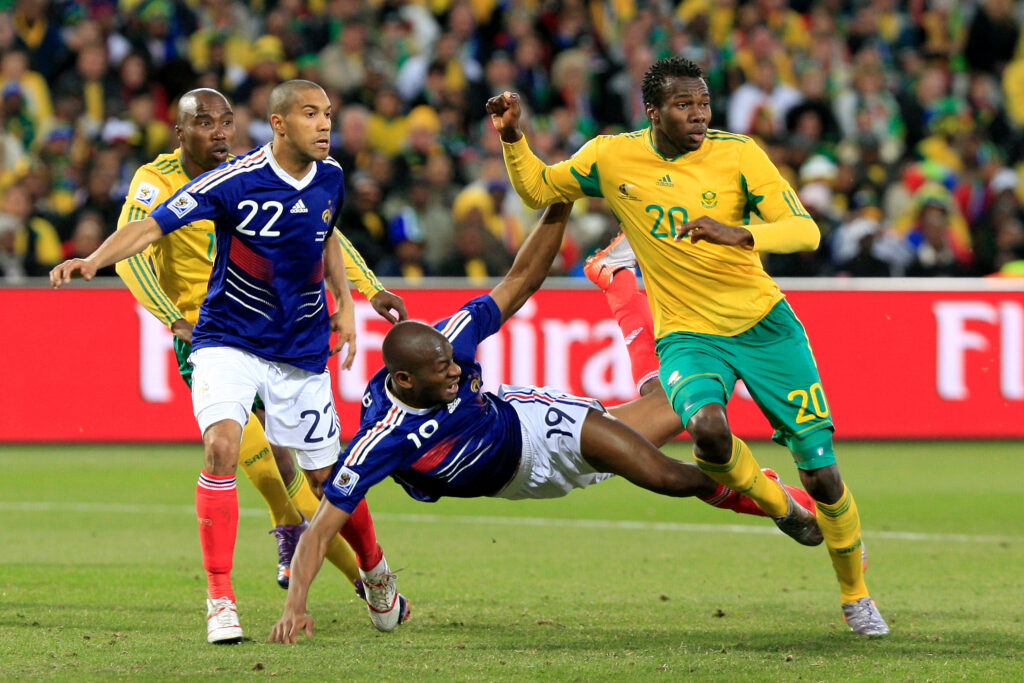
South Africa's Bongani Khumalo (r) in action against France's Gael Clichy (l) and Abou Diaby (c) (Photo by EMPICS Sport - PA Images via Getty Images)
The Endurance Battle vs. South Korea
The final group stage hurdle comes against an AFC powerhouse. South Korea, ranked 25th in the world, navigated their qualification group undefeated. However, their record of four draws in ten matches shows they can be bogged down and frustrated.
Recent friendly defeats to Côte d’Ivoire (4-0) and Austria (1-0) highlight a historical trend: the South Koreans often struggle to cope with the direct, highly physical approach characteristic of African football. South Africa needs to bring unapologetic aggression to the pitch to rattle the South Koreans and disrupt their passing rhythm. However, this physical dominance requires immense discipline. South Korea is globally respected for its relentless, lung-busting stamina. South Africa must be assertive without becoming reckless, as giving away cheap set-pieces around the penalty box is exactly how South Korea punishes overzealous defending.
The Verdict: A Test of Adaptability
Ultimately, Group A may not be a traditional “Group of Death,” but it is undoubtedly a group of shifting identities. To survive and advance, Bafana Bafana cannot afford to be one-dimensional. The technical team will be tasked with executing three entirely distinct tactical blueprints over the course of the group stage, demanding immense mental and physical flexibility from the squad.
If South Africa can weather the early storm and manage the hostile atmosphere in Mexico City, exploit the structural vulnerabilities of the Europeans in Atlanta, and match the legendary stamina of the South Koreans, the mandate of reaching the knockout stages is highly achievable. The nostalgic echoes of the 2010 World Cup will undoubtedly serve as a romantic backdrop for the opening fixture, but in 2026, it will be ruthless tactical discipline and on-pitch adaptability that dictate whether Bafana Bafana’s campaign ends in the group stages or continues into the history books.
DURBAN, SOUTH AFRICA - MARCH 27: Relebohile Mofokeng of South Africa and Adalberto Carrasquilla of Panama during the International Friendly match between South Africa and Panama at Moses Mabhida Stadium on March 27, 2026 in Durban, South Africa. (Photo by Daniel Hlongwane/Gallo Images)